John Milton livre Le Paradis perdu
Le Paradis perdu ('), 1667 et 1674
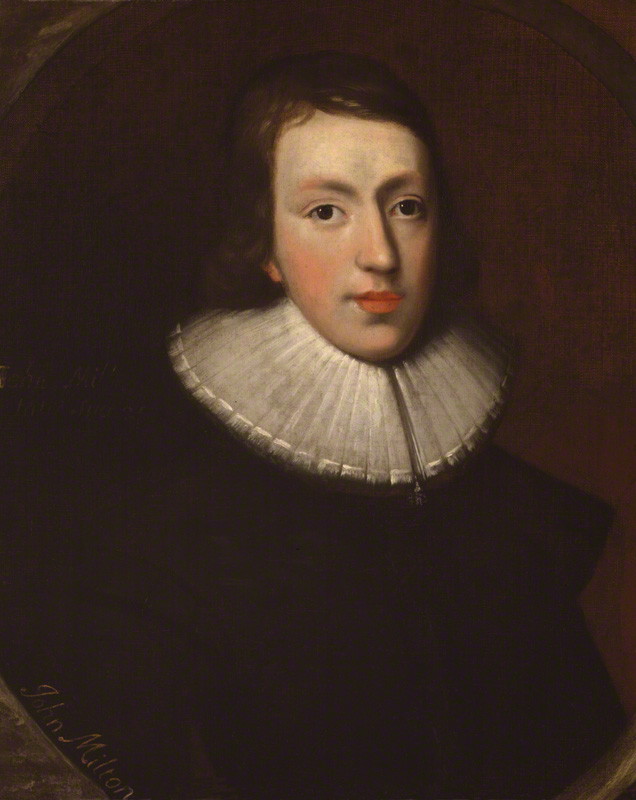
John Milton est un poète et un pamphlétaire anglais, célèbre pour être, en particulier, l’auteur de plusieurs poèmes épiques, Le Paradis perdu, Le Paradis retrouvé et Samson Agonistes, et aussi de sonnets.
Né en 1608 à Londres, alors dans le Royaume d'Angleterre, il fréquente de prestigieux établissements, St Paul's à Londres et Christ's College à Cambridge. Cependant, son désaccord avec son tutor rend son éducation, dans un premier temps, tumultueuse. À bien des égards, cependant, c'est un autodidacte qui ne cesse d'étudier et approfondir ses connaissances en langues anciennes et modernes, philosophie, littérature et théologie.
Après la victoire puritaine du Commonwealth de l'Angleterre, il est nommé secrétaire d'État aux Langues étrangères, poste qui le conduit représenter le nouveau régime auprès de l'étranger. Il publie de nombreux pamphlets et traités en latin ou en anglais. Sa vue baisse inexorablement et, à l'âge de 40 ans, il est complètement aveugle. Il reçoit alors l'aide d'assistants, en particulier celle du poète Andrew Marvell.
Lors de la Restauration, il est arrêté et emprisonné à la tour de Londres pendant quelques semaines, mais se voit assez rapidement libéré. Il se consacre alors à l'écriture de ses longs poèmes épiques, d'une Histoire de l'Angleterre et aussi de sonnets plus intimes, dont le célèbre On His Blindness .
Il meurt le 8 novembre 1674. Il est considéré comme l'un des géants de la poésie anglaise. Wikipedia
John Milton livre Le Paradis perdu
Le Paradis perdu ('), 1667 et 1674
“[…], la paix ne corrompt pas moins que la guerre ne dévaste.”
John Milton livre Le Paradis perdu
Le Paradis perdu ('), 1667 et 1674
“Celui qui a vaincu par la force, n’a vaincu qu’à moitié son ennemi.”
John Milton livre Le Paradis perdu
Le Paradis perdu ('), 1667 et 1674
“[…], régner est digne d’ambition, même en enfer; mieux vaut régner en enfer que servir le ciel.”
John Milton livre Le Paradis perdu
Le Paradis perdu (Paradise Lost), 1667 et 1674
“A poet soaring in the high reason of his fancies, with his garland and singing robes about him.”
The Reason of Church Government (1641), Book II, Introduction
John Milton Lycidas
Source: Lycidas (1637), Line 64; comparable to: "Erant quibus appetentior famæ videretur, quando etiam sapientibus cupido gloriae novissima exuitur" (Translated: "Some might consider him as too fond of fame, for the desire of glory clings even to the best of men longer than any other passion"), Tacitus, Historiae, iv. 6; said of Helvidius Priscus.
“And add to these retired Leisure,
That in trim gardens takes his pleasure.”
Source: Il Penseroso (1631), Line 49
“In mirth that after no repenting draws.”
To Cyriack Skinner, upon His Blindness (c. 1655)
“Peace hath her victories
No less renowned than war.”
To the Lord General Cromwell (1652)
Quoted by President Benjamin Harrison in his dedication of the Chicago Auditorium, and thereafter inscribed on the building, as reported in Dr. William Carter, "Progress in World's Peace Movement", California Outlook (1913), Vol. 14, p. 11
“The gay motes that people the sunbeams.”
Source: Il Penseroso (1631), Line 8
“That would have made Quintilian stare and gasp.”
On the Detraction which followed upon my writing certain Treatises, reported in Bartlett's Familiar Quotations, 10th ed. (1919)
“Till old experience do attain
To something like prophetic strain.”
Source: Il Penseroso (1631), Line 173
“Thy liquid notes that close the eye of day.”
Sonnet to the Nightingale, reported in Bartlett's Familiar Quotations, 10th ed. (1919). Compare: "That well by reason men it call may / The daisie, or els the eye of the day, / The emprise, and floure of floures all", Geoffrey Chaucer, Prologue of the Legend of Good Women, line 183
John Milton Paradise Regained
Book II: Lines 44-48
Paradise Regained (1671)
“License they mean when they cry, Liberty!
For who loves that must first be wise and good.”
On the Detraction which followed upon my writing certain Treatises, reported in Bartlett's Familiar Quotations, 10th ed. (1919)
“To reign is worth ambition though in Hell:
Better to reign in Hell, than serve in Heaven.”
John Milton livre Le Paradis perdu
i.262-263
Paradise Lost (1667)
“Men of most renowned virtue have sometimes by transgressing most truly kept the law.”
John Milton livre Tetrachordon
Tetrachordon (1644–1645)
“He touch'd the tender stops of various quills,
With eager thought warbling his Doric lay.”
John Milton Lycidas
Source: Lycidas (1637), Line 188
“It is not miserable to be blind; it is miserable to be incapable of enduring blindness.”
Non est miserum esse caecum, miserum est caecitatem non posse ferre.
Pro Populo Anglicano Defensio Secunda (1654) p. 32 http://books.google.com/books?id=nbO6Zde06ocC&q=Non+%22caecitatem+non%22&pg=PA32#v=onepage
“Litigious terms, fat contentions, and flowing fees.”
Tractate of Education (1644)
“But O the heavy change, now thou art gone,
Now thou art gone and never must return!”
John Milton Lycidas
Source: Lycidas (1637), Line 37
“At last he rose, and twitched his mantle blue:
Tomorrow to fresh woods and pastures new.”
John Milton Lycidas
Source: Lycidas (1637), Line 192
“Untwisting all the chains that tie
The hidden soul of harmony.”
Source: L'Allegro (1631), Line 143
“The mountain nymph, sweet Liberty.”
Source: L'Allegro (1631), Line 36
“His words … like so many nimble and airy servitors trip about him at command.”
Apology for Smectymnuus (1642)
“Sweet bird, that shunn'st the noise of folly,
Most musical, most melancholy!”
Source: Il Penseroso (1631), Line 61
John Milton livre Eikonoklastes
Eikonoklastes (1649), 23


