John Milton livre Le Paradis perdu
Le Paradis perdu ('), 1667 et 1674
John Milton est un poète et un pamphlétaire anglais, célèbre pour être, en particulier, l’auteur de plusieurs poèmes épiques, Le Paradis perdu, Le Paradis retrouvé et Samson Agonistes, et aussi de sonnets.
Né en 1608 à Londres, alors dans le Royaume d'Angleterre, il fréquente de prestigieux établissements, St Paul's à Londres et Christ's College à Cambridge. Cependant, son désaccord avec son tutor rend son éducation, dans un premier temps, tumultueuse. À bien des égards, cependant, c'est un autodidacte qui ne cesse d'étudier et approfondir ses connaissances en langues anciennes et modernes, philosophie, littérature et théologie.
Après la victoire puritaine du Commonwealth de l'Angleterre, il est nommé secrétaire d'État aux Langues étrangères, poste qui le conduit représenter le nouveau régime auprès de l'étranger. Il publie de nombreux pamphlets et traités en latin ou en anglais. Sa vue baisse inexorablement et, à l'âge de 40 ans, il est complètement aveugle. Il reçoit alors l'aide d'assistants, en particulier celle du poète Andrew Marvell.
Lors de la Restauration, il est arrêté et emprisonné à la tour de Londres pendant quelques semaines, mais se voit assez rapidement libéré. Il se consacre alors à l'écriture de ses longs poèmes épiques, d'une Histoire de l'Angleterre et aussi de sonnets plus intimes, dont le célèbre On His Blindness .
Il meurt le 8 novembre 1674. Il est considéré comme l'un des géants de la poésie anglaise. Wikipedia
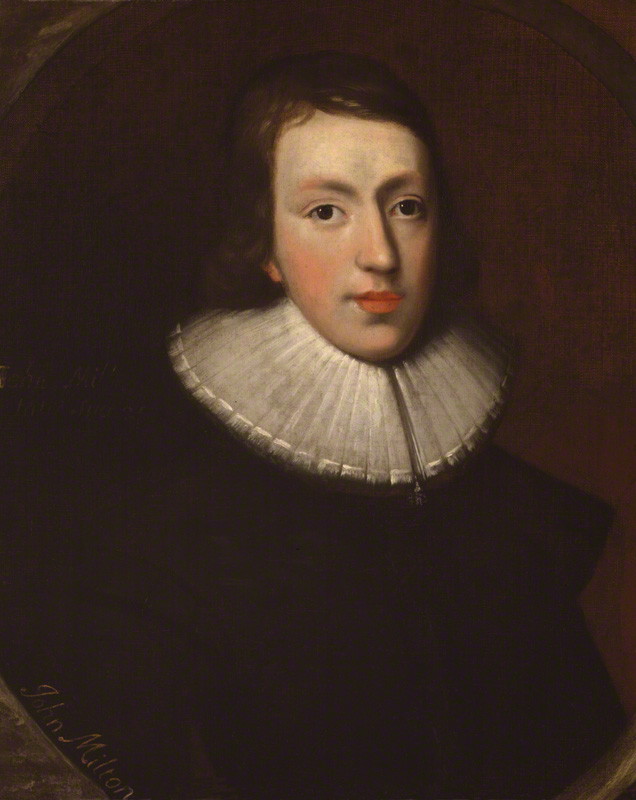
John Milton livre Le Paradis perdu
Le Paradis perdu ('), 1667 et 1674
“[…], la paix ne corrompt pas moins que la guerre ne dévaste.”
John Milton livre Le Paradis perdu
Le Paradis perdu ('), 1667 et 1674
“Celui qui a vaincu par la force, n’a vaincu qu’à moitié son ennemi.”
John Milton livre Le Paradis perdu
Le Paradis perdu ('), 1667 et 1674
“[…], régner est digne d’ambition, même en enfer; mieux vaut régner en enfer que servir le ciel.”
John Milton livre Le Paradis perdu
Le Paradis perdu (Paradise Lost), 1667 et 1674
John Milton livre Le Paradis perdu
Source: Paradise Lost
John Milton livre Le Paradis perdu
Source: Paradise Lost
Attributed to Milton at http://quotationsbook.com/quote/31964/#sthash.zAJjMqmY.dpbs, http://en.wikipedia.org/wiki/Reverence_(emotion)#Quotations, great-quotes.com, and brainyquote.com. <br class="br">Spirituality author Sarah Ban Breathnach writes, in her 1996 Simple Abundance Journal of Gratitude: "Gratitude bestows reverence, allowing us to encounter everyday epiphanies, those transcendent moments of awe that change forever how we experience life (is it abundant or is it lacking?) and the world (is it friendly or is it hostile?)." A Milton quotation occurs on the same page. <br class="br">Misattributed
John Milton livre Le Paradis perdu
Source: Paradise Lost
“To be weak is miserable,
Doing or suffering.”
John Milton livre Le Paradis perdu
Source: Paradise Lost
“So shall the world go on,
To good malignant, to bad men benign,
Under her own weight groaning.”
John Milton livre Le Paradis perdu
Source: Paradise Lost
John Milton livre Le Paradis perdu
Source: Paradise Lost
John Milton livre Le Paradis perdu
Source: Paradise Lost
On Time (1633–34)
Tractate of Education (1644)
“From haunted spring and dale
Edged with poplar pale
The parting genius is with sighing sent.”
John Milton On the Morning of Christ's Nativity
Hymn, stanza 20, line 184
On the Morning of Christ's Nativity (1629)
To the Lady Margaret Ley http://www.bartleby.com/106/85.html
The Reason of Church Government (1641), Book II, Introduction
John Milton livre Le Paradis perdu
x.1532-40
Paradise Lost (1667)
“Have hung
My dank and dropping weeds
To the stern god of sea.”
Translation of Horace. Book i. Ode 5
“Blest pair of Sirens, pledges of Heaven's joy”
At a Solemn Music (c. 1637), line 1
“Be frustrate, all ye stratagems of Hell,
And devilish machinations come to nought.”
John Milton Paradise Regained
Book I: Lines 72-73
Paradise Regained (1671)
Sonnet VIII: When the Assault was intended to the City
The Prose Works of John Milton, Volume II, Book III. http://oll.libertyfund.org/Texts/Milton0174/ProseWorks/HTMLs/0233-02_Pt08b_LongParliament.html (1847)
“Methought I saw my late espousèd saint
Brought to me like Alcestis from the grave.”
On His Deceased Wife (c. 1658)
“O fairest flower! no sooner blown but blasted,
Soft silken primrose fading timelessly.”
Ode on the Death of a fair Infant, dying of a Cough, reported in Bartlett's Familiar Quotations, 10th ed. (1919)
“Attic tragedies of stateliest and most regal argument.”
Tractate of Education (1644)
“Mirth, admit me of thy crew,
To live with her, and live with thee,
In unreprovèd pleasures free.”
Source: L'Allegro (1631), Line 38


