John Milton livre Le Paradis perdu
Le Paradis perdu ('), 1667 et 1674
John Milton est un poète et un pamphlétaire anglais, célèbre pour être, en particulier, l’auteur de plusieurs poèmes épiques, Le Paradis perdu, Le Paradis retrouvé et Samson Agonistes, et aussi de sonnets.
Né en 1608 à Londres, alors dans le Royaume d'Angleterre, il fréquente de prestigieux établissements, St Paul's à Londres et Christ's College à Cambridge. Cependant, son désaccord avec son tutor rend son éducation, dans un premier temps, tumultueuse. À bien des égards, cependant, c'est un autodidacte qui ne cesse d'étudier et approfondir ses connaissances en langues anciennes et modernes, philosophie, littérature et théologie.
Après la victoire puritaine du Commonwealth de l'Angleterre, il est nommé secrétaire d'État aux Langues étrangères, poste qui le conduit représenter le nouveau régime auprès de l'étranger. Il publie de nombreux pamphlets et traités en latin ou en anglais. Sa vue baisse inexorablement et, à l'âge de 40 ans, il est complètement aveugle. Il reçoit alors l'aide d'assistants, en particulier celle du poète Andrew Marvell.
Lors de la Restauration, il est arrêté et emprisonné à la tour de Londres pendant quelques semaines, mais se voit assez rapidement libéré. Il se consacre alors à l'écriture de ses longs poèmes épiques, d'une Histoire de l'Angleterre et aussi de sonnets plus intimes, dont le célèbre On His Blindness .
Il meurt le 8 novembre 1674. Il est considéré comme l'un des géants de la poésie anglaise. Wikipedia
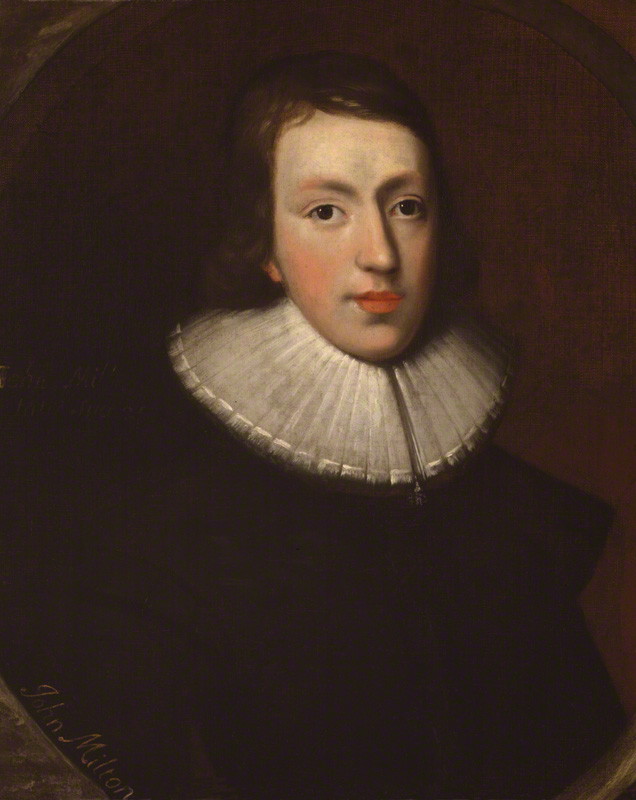
John Milton livre Le Paradis perdu
Le Paradis perdu ('), 1667 et 1674
“[…], la paix ne corrompt pas moins que la guerre ne dévaste.”
John Milton livre Le Paradis perdu
Le Paradis perdu ('), 1667 et 1674
“Celui qui a vaincu par la force, n’a vaincu qu’à moitié son ennemi.”
John Milton livre Le Paradis perdu
Le Paradis perdu ('), 1667 et 1674
“[…], régner est digne d’ambition, même en enfer; mieux vaut régner en enfer que servir le ciel.”
John Milton livre Le Paradis perdu
Le Paradis perdu (Paradise Lost), 1667 et 1674
On Shakespeare (1630)
Source: The Complete Poetry
“Yet he who reigns within himself, and rules
Passions, desires, and fears, is more a king.”
Source: Paradise Regained by John Milton
“This horror will grow mild, this darkness light.”
John Milton livre Le Paradis perdu
Source: Paradise Lost
“For so I created them free and free they must remain.”
John Milton livre Le Paradis perdu
Source: Paradise Lost
“And so sepúlchred in such pomp dost lie,
That kings for such a tomb would wish to die.”
On Shakespeare (1630)
Source: The Complete Poetry
“Freely they stood who stood, and fell who fell.”
John Milton livre Le Paradis perdu
Source: Paradise Lost
“How soon hath Time, the subtle thief of youth,
Stol'n on his wing my three-and-twentieth year!”
On His Having Arrived at the Age of Twenty-three (1631)
“Such sweet compulsion doth in music lie.”
Arcades (1630-1634), line 68
Source: The Complete Poetry
John Milton livre Le Paradis perdu
Source: Paradise Lost
John Milton livre Le Paradis perdu
Source: Paradise Lost
“Our state cannot be severed, we are one,
One flesh; to lose thee were to lose myself.”
John Milton livre Le Paradis perdu
Source: Paradise Lost
“Where the bright seraphim in burning row
Their loud uplifted angel trumpets blow.”
At a Solemn Music
Source: The Complete Poetry
John Milton livre Le Paradis perdu
Source: Paradise Lost
“Who overcomes
By force, hath overcome but half his foe.”
John Milton livre Le Paradis perdu
Source: Paradise Lost
John Milton livre Le Paradis perdu
Source: Paradise Lost
“Ah, why should all mankind
For one man's fault, be condemned,
If guiltless?”
John Milton livre Le Paradis perdu
Source: Paradise Lost
John Milton livre Le Paradis perdu
Source: Paradise Lost
Attributed to Auguste Rodin in: Leonard William Doob (1990). Hesitation: Impulsivity and Reflection. p. 124
Source: On His Blindness (1652)
“Farewell happy fields,
Where joy forever dwells: Hail, horrors, hail.”
John Milton livre Le Paradis perdu
Source: Paradise Lost
“Our torments also may in length of time
Become our Elements.”
John Milton livre Le Paradis perdu
Source: Paradise Lost
“They who have put out the people's eyes reproach them of their blindness.”
Apology for Smectymnuus (1642), section VIII
Source: An apology for Smectymnuus with the reason of church-government by John Milton ...
Contexte: So little care they of beasts to make them men, that by their sorcerous doctrine of formalities, they take the way to transform them out of Christian men into judaizing beasts. Had they but taught the land, or suffered it to be taught, as Christ would it should have been in all plenteous dispensation of the word, then the poor mechanic might have so accustomed his ear to good teaching, as to have discerned between faithful teachers and false. But now, with a most inhuman cruelty, they who have put out the people’s eyes, reproach them of their blindness; just as the Pharisees their true fathers were wont, who could not endure that the people should be thought competent judges of Christ’s doctrine, although we know they judged far better than those great rabbis: yet “this people,” said they, “that know not the law is accursed.”
John Milton livre Areopagitica
Source: Areopagitica


