William Stanley Jevons The Theory of Political Economy
Source: The Theory of Political Economy (1871), Chapter III, Theory of Utility, p. 82.
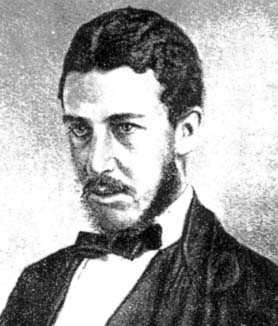
William Stanley Jevons est un économiste et un logicien britannique né le 1er septembre 1835 à Liverpool et mort le 13 août 1882 à Bulverhythe. Il est considéré comme le cofondateur de l'école néoclassique et de la « révolution marginaliste », avec Léon Walras et Carl Menger.
La « révolution marginaliste » se fonde sur l'apparition de nouvelles notions telles que celle d'utilité marginale. Celle-ci augmente au fur et à mesure que la quantité disponible d'un bien diminue. Autrement dit, plus le bien est rare, plus son utilité marginale est grande. Exemple : l'utilité marginale de l'eau est très faible lorsqu'on en a déjà en abondance, mais elle est très grande lorsqu'on n'en a pas du tout ; l'utilité marginale du diamant semble, du moins aux échelles habituelles, décroître plus lentement avec son abondance .
Pour Jevons, il est important de partir des faits. Sa réputation d'économiste est d'abord venue du livre The Coal Question basé sur des données. Cette méthode est explicitée dans Treatise on Logic and Scientific Method et le différencie de Léon Walras qui est davantage hypothético-déductif.
À l'encontre des économistes dit classiques qui adoptaient une approche synthétique, Jevons est en faveur d'une spécialisation des économistes dans les divers champs que recouvre cette discipline. Wikipedia
William Stanley Jevons The Theory of Political Economy
Source: The Theory of Political Economy (1871), Chapter III, Theory of Utility, p. 82.
William Stanley Jevons The Theory of Political Economy
Source: The Theory of Political Economy (1871), Chapter V, Theory of Labour, p. 172.
“It is clear that economics, if it is to be a science at all, must be a mathematical science.”
William Stanley Jevons The Theory of Political Economy
Source: The Theory of Political Economy (1871), Chapter I, Introduction, p. 38.
William Stanley Jevons The Theory of Political Economy
Source: The Theory of Political Economy (1871), Chapter V, Theory of Labour, p. 173.
Reflections on his earlier life, written when he was 27 (December 1862), published in Letters and Journal of W. Stanley Jevons (1886), edited by Harriet A. Jevons, his wife, p. 12.
William Stanley Jevons The Theory of Political Economy
Source: The Theory of Political Economy (1871), Chapter VII, Theory of Capital, p. 190.
William Stanley Jevons The Theory of Political Economy
Preface To The Second Edition, p. 29.
The Theory of Political Economy (1871)
William Stanley Jevons The Theory of Political Economy
Source: The Theory of Political Economy (1871), Chapter III, Theory of Utility, p. 61.
William Stanley Jevons The Theory of Political Economy
Source: The Theory of Political Economy (1871), Chapter VII, Theory of Capital, p. 191.
William Stanley Jevons The Theory of Political Economy
Source: The Theory of Political Economy (1871), Chapter VII, Theory of Capital, p. 185.
William Stanley Jevons The Theory of Political Economy
Source: The Theory of Political Economy (1871), Chapter V, Theory of Labour, p. 176.
William Stanley Jevons The Theory of Political Economy
Source: The Theory of Political Economy (1871), Chapter VII, Theory of Capital, p. 209.
William Stanley Jevons livre The Coal Question
The Coal Question (1865)
“but, in reality, there is no such thing as an exact science.”
William Stanley Jevons The Theory of Political Economy
Source: The Theory of Political Economy (1871), Chapter I, Introduction, p. 40.
William Stanley Jevons The Theory of Political Economy
Source: The Theory of Political Economy (1871), Chapter VII, Theory of Capital, p. 188.
Preface
The Substitution of Similars, The True Principles of Reasoning (1869)
William Stanley Jevons The Theory of Political Economy
Source: The Theory of Political Economy (1871), Chapter VII, Theory of Capital, p. 198.
William Stanley Jevons The Theory of Political Economy
Source: The Theory of Political Economy (1871), Chapter III, Theory of Utility, p. 61.
William Stanley Jevons The Theory of Political Economy
Source: The Theory of Political Economy (1871), Chapter IV, Theory of Exchange, p. 97.
Source: The Principles of Science: A Treatise on Logic and Scientific Method (1874) Vol. 1, p. 169
William Stanley Jevons The Theory of Political Economy
Source: The Theory of Political Economy (1871), Chapter I, Introduction, p. 37.
William Stanley Jevons The Theory of Political Economy
Source: The Theory of Political Economy (1871), Chapter VIII, Concluding Remarks, p. 215.
William Stanley Jevons The Theory of Political Economy
Preface To The First Edition, p. 4.
The Theory of Political Economy (1871)
William Stanley Jevons The Theory of Political Economy
Source: The Theory of Political Economy (1871), Chapter IV, Theory of Exchange, p. 110.
Source: The Principles of Science: A Treatise on Logic and Scientific Method (1874) Vol. 1, p. 136
"The Railways and the State." https://archive.org/stream/essaysaddresses00oweniala#page/467/mode/2up In Essays and Addresses, Macmillan & Co., 1874, page 467.
William Stanley Jevons The Theory of Political Economy
Source: The Theory of Political Economy (1871), Chapter III, Theory of Utility, p. 78.
William Stanley Jevons livre The Coal Question
The Coal Question (1865)
William Stanley Jevons The Theory of Political Economy
Source: The Theory of Political Economy (1871), Chapter VIII : Concluding Remarks, The Noxious Influence of Authority, p. 221.


