“War's a fearsome thing. They'll be cunning that catches me at this wark again.”
Walter Scott livre Old Mortality
Old Mortality, Volume II (1816), Chapter XI.
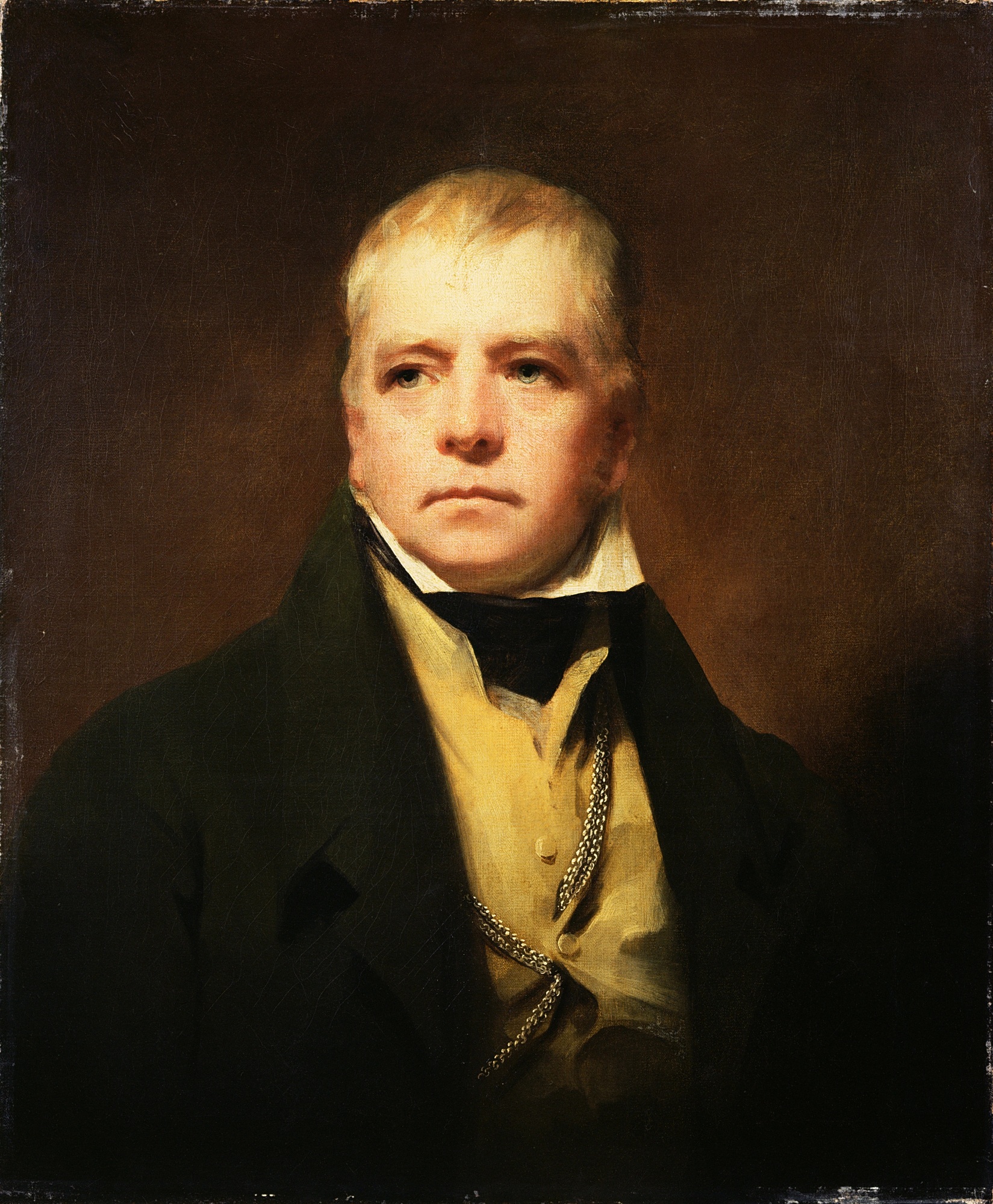
Walter Scott est un poète, écrivain et historien écossais né le 15 août 1771 à Édimbourg et mort le 21 septembre 1832 à Abbotsford.
Avocat de formation, amateur d'antiquités, il parcourt d'abord l'Écosse, à la recherche de son passé. Au tournant des XVIIIe et XIXe siècles, il se lance dans la littérature, publiant des textes anciens ou appartenant à la tradition populaire ainsi que des poèmes de son cru, comme La Dame du lac. Puis, devant la gloire montante de Lord Byron, il se tourne vers le roman écossais , avant d'évoluer vers le roman historique, avec Ivanhoé et Quentin Durward .
C'est l'un des plus célèbres auteurs écossais avec David Hume de Godscroft, David Hume, Adam Smith, Robert Burns ou Robert Louis Stevenson. Il est également, avec Wordsworth, Coleridge, Byron, Shelley ou Keats, l'une des plus illustres figures du romantisme britannique. Il est aussi un des représentants du roman historique, il a contribué à forger une image romantique de l'Écosse et de son histoire. C'est à lui, notamment, que l'on doit le retour de l'usage du tartan et du kilt, dont le port avait été interdit par une loi du Parlement en 1746. Wikipedia
“War's a fearsome thing. They'll be cunning that catches me at this wark again.”
Walter Scott livre Old Mortality
Old Mortality, Volume II (1816), Chapter XI.
“But woe awaits a country when
She sees the tears of bearded men.”
Walter Scott Marmion
Canto V, stanza 16.
Marmion (1808)
“Tell that to the marines—the sailors won't believe it.”
Walter Scott livre Redgauntlet
Redgauntlet, Vol. II (1824), Ch. 13 http://books.google.com/books?id=ixkGAAAAQAAJ&q=%22Tell+that+to+the+marines+the+sailors+won't+believe+it%22&pg=PA326#v=onepage.
Canto I, stanza 1. <br class="br"> The Lady of the Lake http://www.gutenberg.org/etext/3011 (1810)
“Within that awful volume lies
The mystery, of mysteries!”
Walter Scott livre The Monastery
Source: The Monastery (1820), Ch. 12.
“Where, where was Roderick then!
One blast upon his bugle-horn
Were worth a thousand men.”
Canto VI, stanza 18. <br class="br"> The Lady of the Lake http://www.gutenberg.org/etext/3011 (1810)
Walter Scott Marmion
Canto VI, introduction, st. 1.
Marmion (1808)
Walter Scott livre Ivanhoe
Ivanhoe, Chap. xxxix.
Bartlett's Familiar Quotations, 10th ed. (1919)
“Steady of heart, and stout of hand.”
Walter Scott The Lay of the Last Minstrel
Canto I, stanza 21.
The Lay of the Last Minstrel (1805)
Walter Scott livre Chronicles of the Canongate
Chronicles of the Canongate (1828), Second Series, Ch. 1 http://books.google.com/books?id=lo8nAAAAMAAJ&q=%22There+is+a+vulgar+incredulity+which+in+historical+matters+as+well+as+in+those+of+religion+finds+it+easier+to+doubt+than+to+examine%22&pg=PA19#v=onepage
“Oh, young Lochinvar is come out of the West,
Through all the wide Border his steed was the best.”
Walter Scott Marmion
Canto V, st. 12 (Lochinvar, st. 1).
Marmion (1808)
Walter Scott livre Waverley
Source: Waverley (1814), Chapter LXX
“Along thy wild and willow'd shore.”
Walter Scott The Lay of the Last Minstrel
Canto IV, stanza 1.
The Lay of the Last Minstrel (1805)
“And ne'er did Grecian chisel trace
A Nymph, a Naiad, or a Grace
Of finer form or lovelier face.”
Canto I, stanza 18. <br class="br"> The Lady of the Lake http://www.gutenberg.org/etext/3011 (1810)
“Come as the winds come, when
Forests are rended,
Come as the waves come, when
Navies are stranded.”
Pibroch of Donald Dhu (1816), St. 4.
Walter Scott livre Ivanhoe
Source: Ivanhoe (1819), Ch. 23.
Walter Scott livre Waverley
Source: Waverley (1814), Chapter LVII
“If thou would'st view fair Melrose aright,
Go visit it by the pale moonlight.”
Walter Scott The Lay of the Last Minstrel
Canto II, stanza 1.
The Lay of the Last Minstrel (1805)
Canto II, stanza 22. <br class="br"> The Lady of the Lake http://www.gutenberg.org/etext/3011 (1810)
“Saint George and the Dragon!-Bonny Saint George for Merry England!-The castle is won!”
Walter Scott livre Ivanhoe
Source: Ivanhoe (1819), Ch. 31, Wamba celebrates their victory.
“Time rolls his ceaseless course.”
Canto III, stanza 1. <br class="br"> The Lady of the Lake http://www.gutenberg.org/etext/3011 (1810)
Walter Scott livre The Antiquary
The Antiquary (1816), On the postal service
Walter Scott livre Ivanhoe
Source: Ivanhoe (1819), Ch. 27, Proverb recited by Wamba to De Bracy and Front-de-Boeuf.
Countess Brenhilda in Count Robert of Paris (1832), Ch. 25.
Life of Napoleon.
Bartlett's Familiar Quotations, 10th ed. (1919)
“Stood for his country’s glory fast,
And nail’d her colours to the mast!”
Walter Scott Marmion
Canto I, introduction, st. 10.
Marmion (1808)
Walter Scott livre Ivanhoe
Source: Ivanhoe (1819), Ch. 23, De Bracy's vain attempt to woo Rowena using the language of courtly love.


