“A foot more light, a step more true,
Ne'er from the heath-flower dash'd the dew.”
Canto I, stanza 18. <br class="br"> The Lady of the Lake http://www.gutenberg.org/etext/3011 (1810)
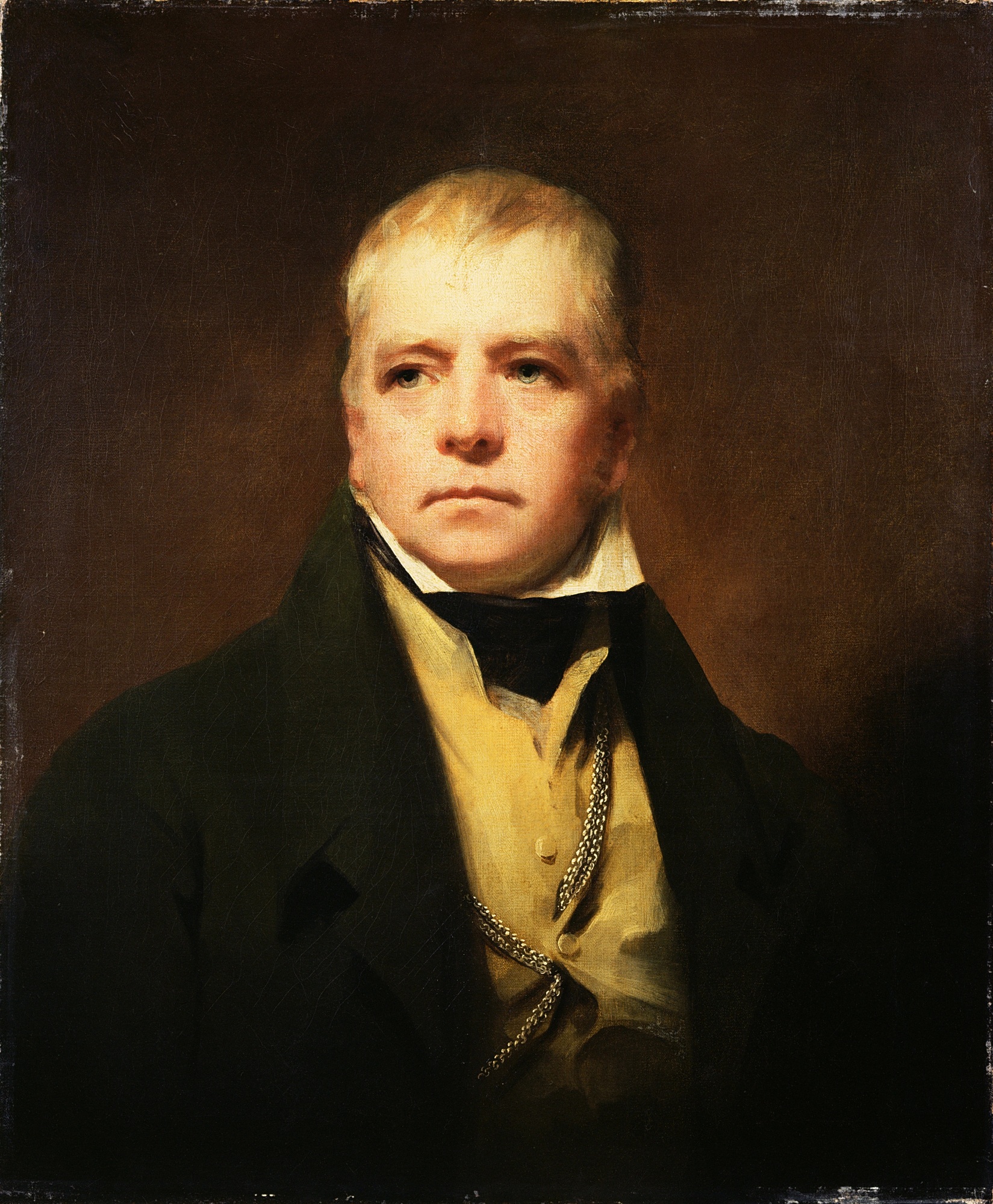
Walter Scott est un poète, écrivain et historien écossais né le 15 août 1771 à Édimbourg et mort le 21 septembre 1832 à Abbotsford.
Avocat de formation, amateur d'antiquités, il parcourt d'abord l'Écosse, à la recherche de son passé. Au tournant des XVIIIe et XIXe siècles, il se lance dans la littérature, publiant des textes anciens ou appartenant à la tradition populaire ainsi que des poèmes de son cru, comme La Dame du lac. Puis, devant la gloire montante de Lord Byron, il se tourne vers le roman écossais , avant d'évoluer vers le roman historique, avec Ivanhoé et Quentin Durward .
C'est l'un des plus célèbres auteurs écossais avec David Hume de Godscroft, David Hume, Adam Smith, Robert Burns ou Robert Louis Stevenson. Il est également, avec Wordsworth, Coleridge, Byron, Shelley ou Keats, l'une des plus illustres figures du romantisme britannique. Il est aussi un des représentants du roman historique, il a contribué à forger une image romantique de l'Écosse et de son histoire. C'est à lui, notamment, que l'on doit le retour de l'usage du tartan et du kilt, dont le port avait été interdit par une loi du Parlement en 1746. Wikipedia
“A foot more light, a step more true,
Ne'er from the heath-flower dash'd the dew.”
Canto I, stanza 18. <br class="br"> The Lady of the Lake http://www.gutenberg.org/etext/3011 (1810)
Walter Scott livre Ivanhoe
Source: Ivanhoe (1819), Ch. 29, Ivanhoe explains to Rebecca the virtues of chivalry.
Walter Scott livre Rokeby
Canto V, stanza 1.
Rokeby (1813)
“O fading honours of the dead!
O high ambition, lowly laid!”
Walter Scott The Lay of the Last Minstrel
Canto II, stanza 10.
The Lay of the Last Minstrel (1805)
“In man's most dark extremity
Oft succour dawns from Heaven.”
Walter Scott The Lord of the Isles
Canto I, stanza 20.
The Lord of the Isles (1815)
To a Lock of Hair http://www.bartleby.com/106/105.html.
“Vacant heart, and hand, and eye,
Easy live and quiet die.”
Walter Scott livre The Bride of Lammermoor
The Bride of Lammermoor (1819), Ch. 3 - Lucy Ashton's Song.
“I cannot tell how the truth may be;
I say the tale as 'twas said to me.”
Walter Scott The Lay of the Last Minstrel
Canto II, stanza 22.
The Lay of the Last Minstrel (1805)
“No pale gradations quench his ray,
No twilight dews his wrath allay.”
Walter Scott livre Rokeby
Canto VI, stanza 21.
Rokeby (1813)
“Hail to the Chief who in triumph advances!”
Canto II, stanza 19. <br class="br"> The Lady of the Lake http://www.gutenberg.org/etext/3011 (1810)
Canto I, stanza 31. <br class="br"> The Lady of the Lake http://www.gutenberg.org/etext/3011 (1810)
“In the lost battle,
Borne down by the flying,
Where mingles war's rattle
With groans of the dying.”
Walter Scott Marmion
Canto III, stanza 11.
Marmion (1808)
“Randolph, thy wreath has lost a rose.”
Walter Scott The Lord of the Isles
Canto VI, stanza 18.
The Lord of the Isles (1815)
Walter Scott livre Ivanhoe
Source: Ivanhoe (1819), Ch. 3.
Walter Scott livre Ivanhoe
Source: Ivanhoe (1819), Ch. 43, Malvoisin to Mont-Fitchet
“Spangling the wave with lights as vain
As pleasures in the vale of pain,
That dazzle as they fade.”
Walter Scott The Lord of the Isles
Canto I, stanza 23.
The Lord of the Isles (1815)
Walter Scott livre The Talisman
The Talisman (1825), Introduction.
Walter Scott The Lay of the Last Minstrel
Introduction
The Lay of the Last Minstrel (1805)
“Her blue eyes sought the west afar,
For lovers love the western star.”
Walter Scott The Lay of the Last Minstrel
Canto III, stanza 24.
The Lay of the Last Minstrel (1805)
“Ah! County Guy, the hour is nigh,
The sun has left the lea.”
Walter Scott livre Quentin Durward
Quentin Durward (1823), Ch. 4.
Walter Scott Marmion
Canto V, st. 12 (Lochinvar, st. 5).
Marmion (1808)
Walter Scott livre Waverley
Source: Waverley (1814), Chapter LXXII, A postscript, which should have been a preface
“I was not always a man of woe.”
Walter Scott The Lay of the Last Minstrel
Canto II, stanza 12.
The Lay of the Last Minstrel (1805)
“But search the land of living men,
Where wilt thou find their like again?”
Walter Scott Marmion
Canto I, introduction, st. 11.
Marmion (1808)
“November’s sky is chill and drear,
November’s leaf is red and sear.”
Walter Scott Marmion
Canto I, introduction, st. 1.
Marmion (1808)
Walter Scott livre The Heart of Midlothian
The Heart of Midlothian (1818), Ch. 4.
Canto V, stanza 10. <br class="br"> The Lady of the Lake http://www.gutenberg.org/etext/3011 (1810)
Walter Scott livre Peveril of the Peak
Peveril of the Peak, Chap. xlii.
Bartlett's Familiar Quotations, 10th ed. (1919)
“Profan'd the God-given strength, and marr'd the lofty line.”
Walter Scott Marmion
Canto I, introduction.
Marmion (1808)


