Thomas Carlyle citations
Page 9

Thomas Carlyle, né à Ecclefechan , dans le comté de Dumfries et Galloway le 4 décembre 1795, mort à Chelsea à Londres le 5 février 1881, est un écrivain, satiriste et historien britannique, dont le travail eut une très forte influence durant l'époque victorienne. Wikipedia  

✵ 4. décembre 1795 – 5. février 1881  •  Autres noms Томас Карлайл
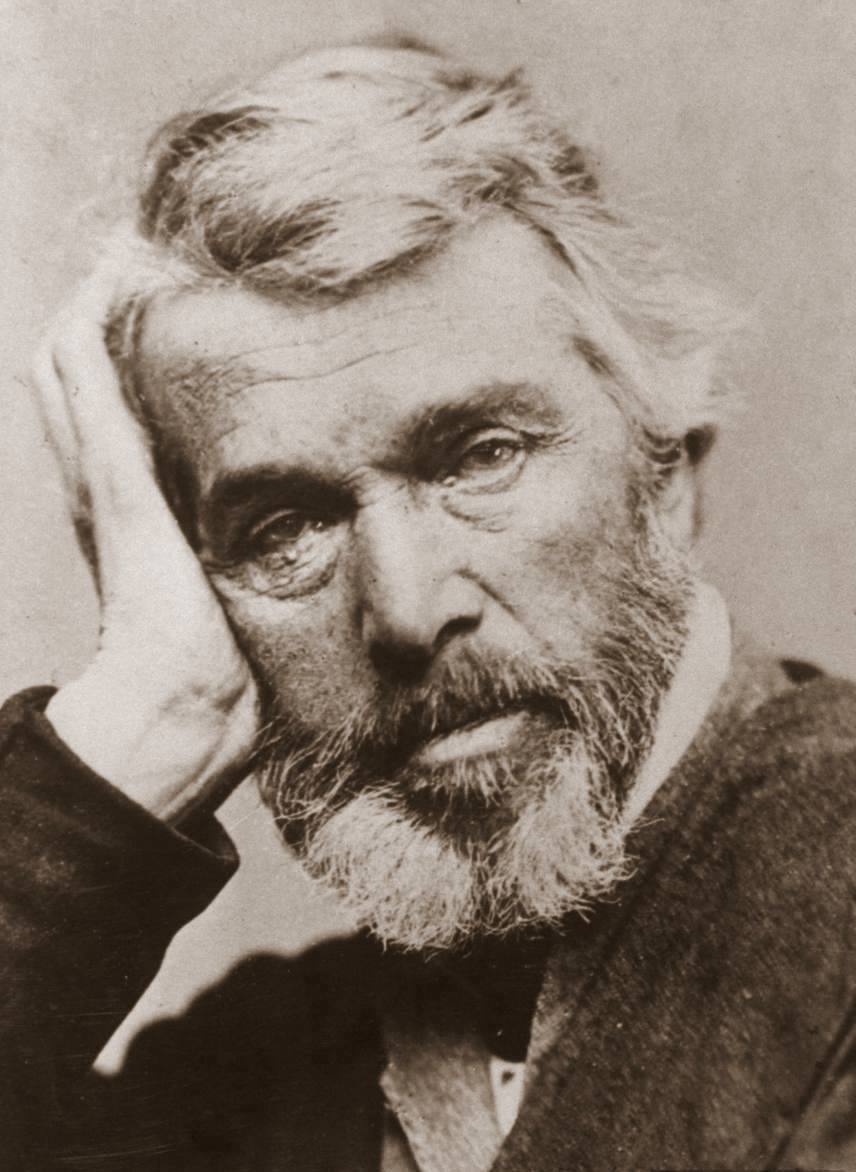
Thomas Carlyle photo
Thomas Carlyle: 482 citations1 J'aime

Thomas Carlyle Citations

“L'on a beaucoup écrit sur la façon dont Mahomet propagea sa religion par l'épée. Il y a, sans doute, beaucoup d'honnêteté de la part des chrétiens à se vanter d'avoir, eux, propagé leur religion pacifiquement.”

Thomas Carlyle livre Les héros, le culte des héros et l'héroique dans l'histoire

Much has been said of Mahomet's propagating his Religion by the sword. It is no doubt far nobler what we have to boast of the Christian Religion, that it propagated itself peaceably.
en
On Heroes, Hero-worship, and the Heroic in History, 1841

Thomas Carlyle: Citations en anglais

“There are depths in man that go to the lowest hell, and heights that reach the highest heaven, for are not both heaven and hell made out of him, everlasting miracle and mystery that he is.”

Thomas Carlyle

As quoted in A Dictionary of Thoughts : Being a Cyclopedia of Laconic Quotations from the Best Authors, Both Ancient and Modern (1891) edited by Tryon Edwards. p. 327.
1890s and attributed from posthumous publications

“Theocracy, Government of God, is precisely the thing to be struggled for!”

Thomas Carlyle

1840s, Heroes and Hero-Worship (1840), The Hero as Priest

“France was long a despotism tempered by epigrams.”

Thomas Carlyle

Pt. I, Bk. I, ch. 1.
1830s, The French Revolution. A History (1837)

“Misery which, through long ages, had no spokesman, no helper, will now be its own helper and speak for itself.”

Thomas Carlyle

Pt. I, Bk. VII, ch. 8.
1830s, The French Revolution. A History (1837)

“It is now one of my greatest blessings (for which I would thank Heaven from the heart) that he lived to see me, through various obstructions, attain some look of doing well. He had "educated" me against much advice, I believe, and chiefly, if not solely, from his own noble faith. James Bell, one of our wise men, had told him, "Educate a boy, and he grows up to despise his ignorant parents." My father once told me this, and added, "Thou hast not done so; God be thanked for it." I have reason to think my father was proud of me (not vain, for he never, except when provoked, openly bragged of us); that here too he lived to see the pleasure of the Lord prosper in his hands. Oh, was it not a happiness for me! The fame of all this planet were not henceforth so precious.”

Thomas Carlyle

1880s, Reminiscences (1881)
Contexte: Clearness, emphatic clearness, was his highest category of man's thinking power. He delighted always to hear good argument. He would often say, I would like to hear thee argue with him." He said this of Jeffrey and me, with an air of such simple earnestness, not two years ago (1830), and it was his true feeling. I have often pleased him much by arguing with men (as many years ago I was prone to do) in his presence. He rejoiced greatly in my success, at all events in my dexterity and manifested force. Others of us he admired for our "activity," our practical valor and skill, all of us (generally speaking) for our decent demeanor in the world. It is now one of my greatest blessings (for which I would thank Heaven from the heart) that he lived to see me, through various obstructions, attain some look of doing well. He had "educated" me against much advice, I believe, and chiefly, if not solely, from his own noble faith. James Bell, one of our wise men, had told him, "Educate a boy, and he grows up to despise his ignorant parents." My father once told me this, and added, "Thou hast not done so; God be thanked for it." I have reason to think my father was proud of me (not vain, for he never, except when provoked, openly bragged of us); that here too he lived to see the pleasure of the Lord prosper in his hands. Oh, was it not a happiness for me! The fame of all this planet were not henceforth so precious.
“The difference between Orthodoxy or Mydoxy and Heterodoxy or Thy-doxy.”

Thomas Carlyle

Pt. II, Bk. IV, ch. 2.
1830s, The French Revolution. A History (1837)

“Close thy Byron; open thy Goethe.”

Thomas Carlyle

Bk. I, ch. 9.
1830s, Sartor Resartus (1833–1834)

Auteurs similaires

Lewis Carroll photo
Lewis Carroll4
romancier, essayiste, photographe et mathématicien britanni… None
Honoré de Balzac photo
Honoré de Balzac193
romancier, critique littéraire, essayiste, journaliste et é… None
Mark Twain photo
Mark Twain23
romancier, journaliste et humoriste américain None
Karl Marx photo
Karl Marx69
philosophe, sociologue et économiste allemand None
George Sand photo
George Sand75
romancière et dramaturge française None
Jules Verne photo
Jules Verne55
romancier français None
Jane Austen photo
Jane Austen23
romancière anglaise None
Émile Zola photo
Émile Zola69
romancier, auteur dramatique, critique artistique et littér… None
Gustave Flaubert photo
Gustave Flaubert109
romancier et auteur dramatique français None
Emily Brontë photo
Emily Brontë18
écrivaine britannique None