Thomas Carlyle citations
Page 10

Thomas Carlyle, né à Ecclefechan , dans le comté de Dumfries et Galloway le 4 décembre 1795, mort à Chelsea à Londres le 5 février 1881, est un écrivain, satiriste et historien britannique, dont le travail eut une très forte influence durant l'époque victorienne. Wikipedia  

✵ 4. décembre 1795 – 5. février 1881  •  Autres noms Томас Карлайл
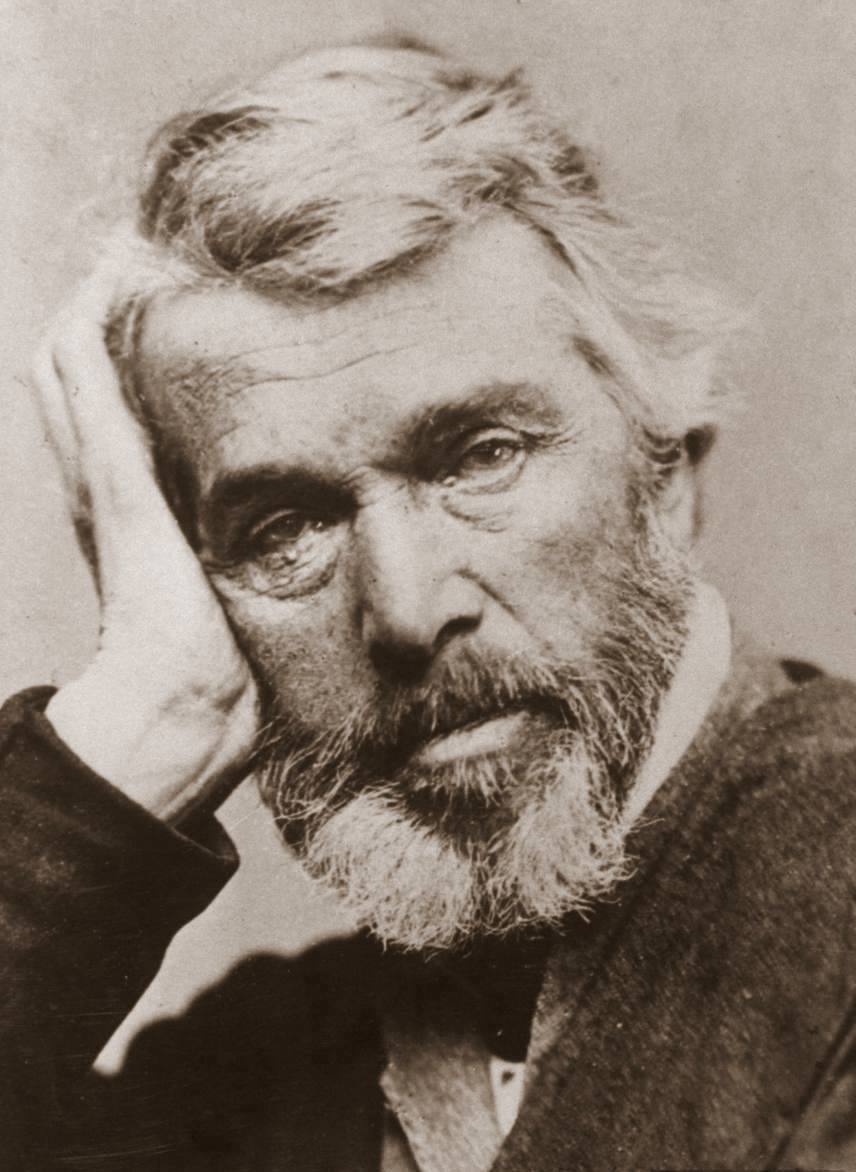
Thomas Carlyle photo
Thomas Carlyle: 482 citations1 J'aime

Thomas Carlyle Citations

“L'on a beaucoup écrit sur la façon dont Mahomet propagea sa religion par l'épée. Il y a, sans doute, beaucoup d'honnêteté de la part des chrétiens à se vanter d'avoir, eux, propagé leur religion pacifiquement.”

Thomas Carlyle livre Les héros, le culte des héros et l'héroique dans l'histoire

Much has been said of Mahomet's propagating his Religion by the sword. It is no doubt far nobler what we have to boast of the Christian Religion, that it propagated itself peaceably.
en
On Heroes, Hero-worship, and the Heroic in History, 1841

Thomas Carlyle: Citations en anglais

“Nature admits no lie.”

Thomas Carlyle

Latter Day Pamphlet, No. 5. (1850).
1820s, Critical and Miscellaneous Essays (1827–1855)

“History a distillation of Rumour.”

Thomas Carlyle

Pt. I, Bk. VII, ch. 5.
1830s, The French Revolution. A History (1837)

“He who would write heroic poems should make his whole life a heroic poem.”

Thomas Carlyle

Life of Schiller.
1820s, Critical and Miscellaneous Essays (1827–1855)

“He that has a secret should not only hide it, but hide that he has it to hide.”

Thomas Carlyle

Pt. II, Bk. I, ch. 7.
1830s, The French Revolution. A History (1837)

“We have oftener than once endeavoured to attach some meaning to that aphorism, vulgarly imputed to Shaftesbury, which however we can find nowhere in his works, that "ridicule is the test of truth."”

Thomas Carlyle livre Characteristics

Voltaire, Foreign Review, (1829); compare: "How comes it to pass, then, that we appear such cowards in reasoning, and are so afraid to stand the test of ridicule?", Shaftesbury, Characteristics. A Letter concerning Enthusiasm, sect. 2.; "Truth, 't is supposed, may bear all lights; and one of those principal lights or natural mediums by which things are to be viewed in order to a thorough recognition is ridicule itself", Shaftesbury, Essay on the Freedom of Wit and Humour, sect. 1.; "'T was the saying of an ancient sage [Gorgias Leontinus, apud Aristotle's "Rhetoric," lib. iii. c. 18], that humour was the only test of gravity, and gravity of humour. For a subject which would not bear raillery was suspicious; and a jest which would not bear a serious examination was certainly false wit", ibid. sect. 5.
1820s, Critical and Miscellaneous Essays (1827–1855)
“I shall now no more behold my dear father with these "bodily eyes. With him a whole threescore and ten years of the past has doubly died for me. It is as if a new leaf in the great hook of time were turned over. Strange time — endless time or of which I see neither end nor beginning. All rushes on. Man follows man. His life is as a tale that has been told; yet under Time does there not lie Eternity? Perhaps my father, all that essentially was my father, is even now near me, with me. Both he and I are with God. Perhaps, if it so please God, we shall in some higher state of being meet one another, recognize one another. As it is written. We shall be forever with God. The possibility, nay (in some way), the certainty, of perennial existence daily grows plainer to me. "The essence of whatever was, is, or shall be, even now is." God is great. God is good. His will be done, for it will be right. As it is, I can think peaceably of the departed love. All that was earthly, harsh, sinful, in our relation has fallen away; all that was holy in it remains. I can see my dear father's life in some measure as the sunk pillar on which mine was to rise and be built; the waters of time have now swelled up round his (as they will round mine); I can see it all transfigured, though I touch it no longer. I might almost say his spirit seems to have entered into me (so clearly do I discern and love him); I seem to myself only the continuation and second volume of my father. These days that I have spent thinking of him and of his end are the peaceablest, the only Sabbath that I have had in London. One other of the universal destinies of man has overtaken me. Thank Heaven, I know, and have known, what it is to be a son; to love a father, as spirit can love spirit. God give me to live to my father's honor and to His. And now, beloved father, farewell for the last time in this world of shadows I In the world of realities may the Great Father again bring us together in perfect holiness and perfect love! Amen!”

Thomas Carlyle

1880s, Reminiscences (1881)

Auteurs similaires

Lewis Carroll photo
Lewis Carroll4
romancier, essayiste, photographe et mathématicien britanni… None
Honoré de Balzac photo
Honoré de Balzac193
romancier, critique littéraire, essayiste, journaliste et é… None
Mark Twain photo
Mark Twain23
romancier, journaliste et humoriste américain None
Karl Marx photo
Karl Marx69
philosophe, sociologue et économiste allemand None
George Sand photo
George Sand75
romancière et dramaturge française None
Jules Verne photo
Jules Verne55
romancier français None
Jane Austen photo
Jane Austen23
romancière anglaise None
Émile Zola photo
Émile Zola69
romancier, auteur dramatique, critique artistique et littér… None
Gustave Flaubert photo
Gustave Flaubert109
romancier et auteur dramatique français None
Emily Brontë photo
Emily Brontë18
écrivaine britannique None