Max Stirner livre L'Unique et sa propriété
L'Unique et sa propriété, 1844
Johann Kaspar Schmidt dit Max Stirner, né le 25 octobre 1806 à Bayreuth et mort le 26 juin 1856 à Berlin, est un philosophe allemand appartenant aux Jeunes hégéliens, considéré comme un des précurseurs de l'existentialisme et de l'anarchisme individualiste.
Il est l'auteur, en 1844, de L'Unique et sa propriété, livre qui connaît un grand retentissement à sa sortie, avant de tomber assez vite dans l'oubli.
Sa philosophie est un réquisitoire contre toutes les puissances supérieures auxquelles on aliène son « Moi », et Stirner vise principalement l'Esprit hégélien, l'Homme feuerbachien et la Révolution socialiste. Stirner exhorte chacun à s'approprier ce qui est en son pouvoir, indépendamment des diverses forces d'oppression extérieures au Moi.
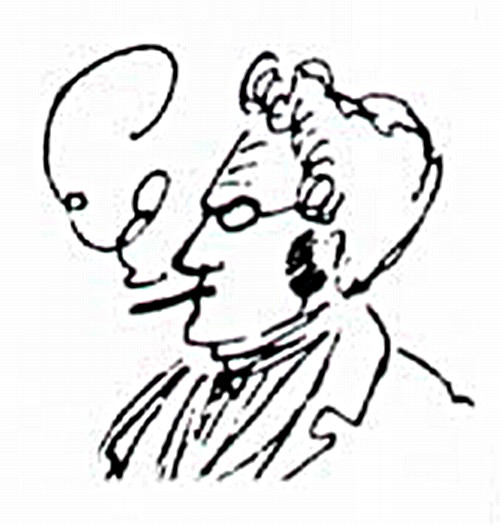
Max Stirner livre L'Unique et sa propriété
L'Unique et sa propriété, 1844
Max Stirner livre L'Unique et sa propriété
L'Unique et sa propriété, 1844
Max Stirner livre L'Unique et sa propriété
Dover 2005, p. 236
The Ego and Its Own (1845)
Max Stirner livre L'Unique et sa propriété
New York 1907, p. 54, 55
The Ego and Its Own (1845)
“Everything sacred is a tie, a fetter.”
Max Stirner livre L'Unique et sa propriété
Cambridge 1995, p. 192
The Ego and Its Own (1845)
Max Stirner livre L'Unique et sa propriété
Cambridge 1995, p. 108
The Ego and Its Own (1844)
Max Stirner livre The False Principle of our Education
Source: The False Principle of our Education (1842), p. 12
Max Stirner livre L'Unique et sa propriété
Tucker 1907, p. 307
The Ego and Its Own (1844)
Max Stirner livre The False Principle of our Education
Source: The False Principle of our Education (1842), p. 11
“The men of the future will yet fight their way to many a liberty that we do not even miss.”
Max Stirner livre L'Unique et sa propriété
Cambridge 1995, p. 114
The Ego and Its Own (1845)
Max Stirner livre L'Unique et sa propriété
S. Byington, trans. (1913), p. 383
The Ego and Its Own (1845)
Max Stirner livre L'Unique et sa propriété
Cambridge 1995, p. 6
The Ego and Its Own (1845)
Max Stirner livre The False Principle of our Education
Source: The False Principle of our Education (1842), p. 19
Max Stirner livre L'Unique et sa propriété
S. Byington, trans. (1913), p. 191
The Ego and Its Own (1845)
Stirner's Critics (1845)
Max Stirner livre L'Unique et sa propriété
Dover 2005, p. 184
The Ego and Its Own (1845)
Max Stirner livre The False Principle of our Education
Source: The False Principle of our Education (1842), p. 21
Max Stirner livre L'Unique et sa propriété
Dover 2005, p. 79
The Ego and Its Own (1845)
Max Stirner livre The False Principle of our Education
Source: The False Principle of our Education (1842), p. 25
“I am owner of my might, and I am so when I now myself as unique.”
Max Stirner livre L'Unique et sa propriété
In the unique one the owner himself returns into his creative nothing, of which he is born. Every higher essence above me, be it God, be it man, weakens the feeling of my uniqueness, and pales only before the sun of this consciousness. If I concern myself for myself, the unique one, then my concern rests on its transitory, mortal creator, who consumes himself, and I may say: All things are nothing to me.
Dover 2005, p. 366
The Ego and Its Own (1845)
Max Stirner livre The False Principle of our Education
Only a formal and material training is being aimed at and only scholars come out of the menageries of the humanists, only "useful citizens" out of those of the realists, both of whom are indeed nothing but subservient people. Our good background of recalcitrancy [sic] gets strongly suppressed and with it the development of knowledge to free will. The result of school is then philistinism.
Source: The False Principle of our Education (1842), p. 23
Max Stirner livre The False Principle of our Education
Truth consists in nothing other than man's revelation of himself, and thereto belongs the discovery of himself, the liberation from all that is alien, the uttermost abstraction or release from all authority, the re-won naturalness. Such thoroughly true men are not supplied by school; if they are there, they are there in spite of school.
Source: The False Principle of our Education (1842), p. 21
Attributed in Forbes Vol 38 Iss. 2 (1936) p. 18, and in Lifetime Speaker's Encyclopedia (1962) by Jacob Morton Braude, p. 275


