“We inhabit the cities of the dead and their ideas inhabit us every day.”
La generación FaceNoBook, Revista Alma Mater, La Habana (July 2012), p. 5
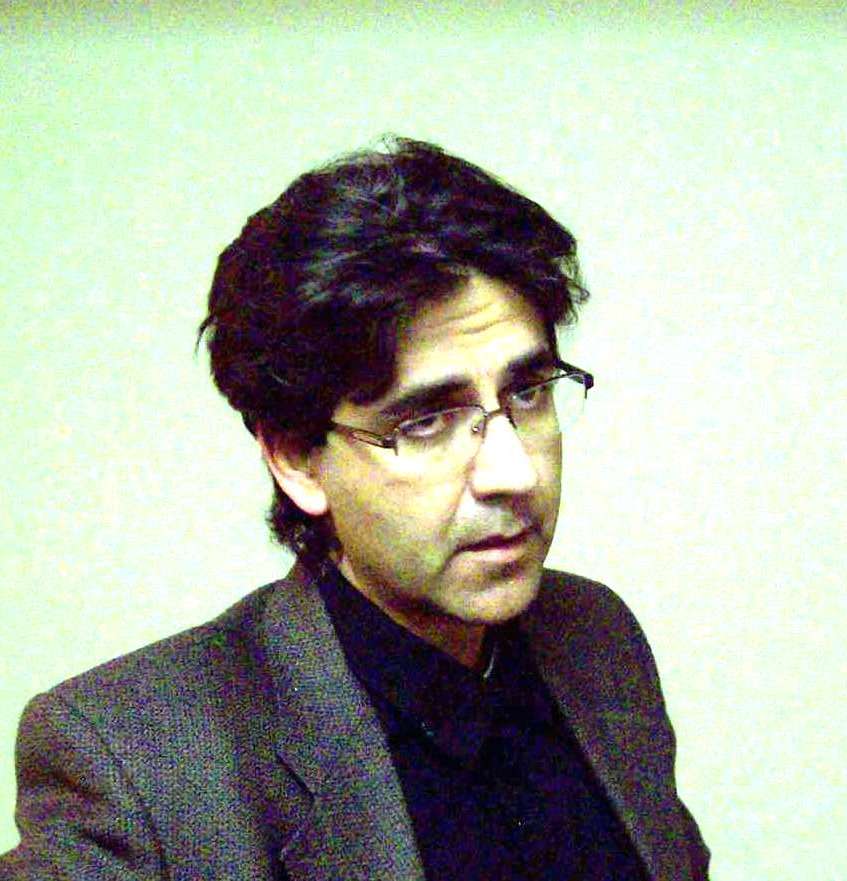
Jorge Majfud est un écrivain uruguayen, né le 10 septembre 1969 à Tacuarembó. Il étudia l’architecture à l’université de la République. À l’heure actuelle, il se consacre intégralement à la littérature et à ses articles dans différents médias. Il enseigne la littérature latino-américaine à l’université de Géorgie, aux États-Unis. Il a publié Hacia qué patrias del silencio , Crítica de la pasión pura , La reina de America , El tiempo que me tocó vivir , Perdona nuestros pecados , La ciudad de la Luna . Il est collaborateur à La Repùblica, à La Venguardia, à Rebellion, à Milenio, à Courrier international de Paris, à Monthly Review, à Resource Center of The Americas, à Revista Iberoamericana, à Página/12, à El País Madrid , au Radio Uruguay, Radio Nacional de Argentina, Radio Exterior de España, Radio Popolare Roma, etc. Il est membre du comité scientifique de la revue Araucaria de Espana. Ses essais et articles ont été traduits en anglais, français, portugais, basque, grec et allemand. En 2012 Foreign Policy le classe comme « one of the 10 most influential Ibero American intellectuals ». En 2012, le magazine américain Foreign_Policy le reconnaît comme "L'Intellu intellectuel latino-américain le plus influent" Majfud est l'éditeur, traducteur et prologue des Ilusionistas, Noam Chomsky, le premier livre publié à l'origine en espagnol par le linguiste a intégré estadounidense,,. Il a intégré des ouvrages collectifs Segunda independencia, Hugo E. Biagini et Arturo Andrés Roig. Aguilar, Altea, Taurus et Alfaguara ; De la Indignación a la Rebeldía , Hiroshima, Truman , Las palabras pueden , 2099 Antología de Ciencia Ficción , plus préface de Eduardo Galeano sur Ventanas .
2014 International Latino Book Awards Finalist Wikipedia
“We inhabit the cities of the dead and their ideas inhabit us every day.”
La generación FaceNoBook, Revista Alma Mater, La Habana (July 2012), p. 5
Interviuri cu scriitor Jorge Majfud in Forumul Judecãtorilor (January 2014) http://www.juridice.ro/346346/revista-forumul-judecatorilor-nr-12014.html
“Probably a form of radical democracy will be the next step humanity is ready to take.”
"Rock Democracies, Paper Freedoms, Scissors Securities", Monthly Review (8 February 2007) http://mrzine.monthlyreview.org/2007/majfud080207.html <br class="br">Contexte: Probably a form of radical democracy will be the next step humanity is ready to take. How will we know when this step is being produced? We need signs.<br>One strong sign will be when the administration of meaning ceases to lie in the hands of elites, especially of political elites. Representative democracy represents what is reactionary about our times. But direct democracy will not come about through any brusque revolution, led by individuals, since it is, by definition, a cultural process where the majority begins to claim and share social power. When this occurs, the parliaments of the world will be what the royals of England are today: an onerous adornment from the past, an illusion of continuity.
“Before the great civil revolution there will be a deepening of the crisis of this obsolete order.”
La globalización mestiza después de la crisis mundial http://www.letralia.com/108/articulo04.htm/ La República newspaper http://www.bitacora.com.uy/articulos/2003/febrero/110/principal.htm (February 2003) <br class="br">Contexte: Before the great civil revolution there will be a deepening of the crisis of this obsolete order. This crisis will happen in almost all areas, from the political order to the economic, passing through the military. The Superpower is nowadays very fragile due to its military resources, with which it has mined the most strategic weapon of ancient diplomacy […] it won’t be able to resist an increasingly hostile context because its economy, base of its military power, will weaken in inverse proportion. Today it’s able to win any war, with or without allies, but the successive triumphs won’t be able to save it from a progressive erosion. The immediate result will be great global insecurity, although it will be overcome with the civil revolution. In this moment breaking point, the West will debate between greater military control or civil disobedience, which will be silent and anonymous, without leaders or warlords.
Critica de la pasión pura (1998)
Cybors (2012)
“Terrorism is not justified with anything, but it’s explained with everything.”
Hiedra (March 2015) https://issuu.com/revistahiedra/docs/hiedra_issuu/53
“A society is not defined as developed by the wealth it has but by the poverty it doesn’t have.”
Ciencia Política newspaper, Buenos Aires, (2008)
Critica de la pasión pura (1998)
La Jornada, México (2 May 2007) http://www.lajornadadeoriente.com.mx/2007/05/02/puebla/s1ret14.php
"Teología del dinero" http://www.bitacora.com.uy/articulos/2002/noviembre/98/98general.htm Bitácora, magazine, La República, Uruguay (13 November 2002)
"Collateral Effects" https://www.youtube.com/watch?v=0HvdjRCajZU, from the book Words Can (2007) United Nations Children Fund, UNICEF]
“Hypocrisy is a luxury of the powerful.”
Debate with Uruguayan presidential candidate Mr. Pedro Bordaberry. Zoom a la noticia, Canal NTN24 (1 July 2014)
La ciudad de la Luna (2009)
Carta abierta a Donald Trump http://www.huffingtonpost.es/jorge-majfud/carta-abierta-a-donald-tr_b_10218246.html Translation at The Huffington Post http://www.huffingtonpost.com/entry/57dc39fee4b0d5920b5b2aac?timestamp=1474051083758.
Critica de la pasión pura (1998)
"The Slow Suicide of the West" Monthly Review (2006) https://mronline.org/2006/11/14/majfud141106-html/ La Republica newspaper, Uruguay, (February 2003)


