“Where yet was ever found a mother
Who'd give her booby for another?”
Fable III, "The Mother, the Nurse, and the Fairy"
Fables (1727)
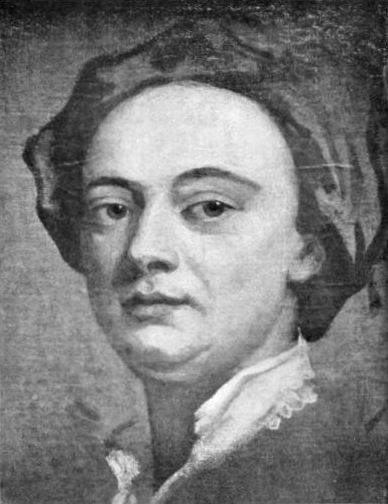
John Gay, né le 30 juin 1685 à Barnstaple, dans le Devon, et mort le 4 décembre 1732 à Londres, est un poète et dramaturge anglais.
Il est surtout connu pour avoir écrit le livret de L'Opéra des gueux , sur une musique de Johann Christoph Pepusch. Ce dernier a, en fait, dans un esprit nationaliste et anti-italien, collecté et mis bout à bout des airs traditionnels britanniques pour créer le premier anti-opéra. Figurent aussi quelques airs d'opéra italien tournés en ridicule, interprétés qu'ils sont par des mendiants et bandits des bas-fonds londoniens, censés mimer la haute société d'alors. Les personnages de cet anti-opéra, dont le capitaine Macheath et Polly Peachum, ont inspiré Bertolt Brecht et Kurt Weill pour leur Opéra de quat'sous. Cette œuvre injustement oubliée n'est plus guère représentée. La dernière adaptation française, par Bernard Turle, a été donnée sous la direction de David Roblou au Week-End Musical. On se reportera à la version cinématographique de Peter Brook avec Laurence Olivier. Wikipedia
“Where yet was ever found a mother
Who'd give her booby for another?”
Fable III, "The Mother, the Nurse, and the Fairy"
Fables (1727)
Lucy, Act II, sc. xv
The Beggar's Opera (1728)
“Life is a jest; and all things show it. I thought so once; and now I know it.”
My Own Epitaph, inscribed on Gay’s monument in Westminster Abbey; also quoted as "I thought so once; but now I know it".
Variante: Life is a jest, and all things show it,
I thought so once, and now I know it.
“Fill it up. I take as large draughts of liquor as I did of love. I hate a flincher in either.”
Mrs. Trapes, Act III, sc. vi
The Beggar's Opera (1728)
“In beauty faults conspicuous grow;
The smallest speck is seen on snow.”
Fable XI, "The Peacock, Turkey, and Goose"
Fables (1727)
“When we risk no contradiction,
It prompts the tongue to deal in fiction.”
Fable X, "The Elephant and the Bookseller"
Fables (1727)
“I must have women—there is nothing unbends the mind like them.”
Macheath, Act II, sc. iii
The Beggar's Opera (1728)
Macheath, Act III, sc. xi, air 57
The Beggar's Opera (1728)
“Youth's the season made for joys,
Love is then our duty.”
Act II, sc. iv, air 22
The Beggar's Opera (1728)
“All in the Downs the fleet was moor'd.”
Sweet William's Farewell to Black-eyed Susan, reported in Bartlett's Familiar Quotations, 10th ed. (1919)
Fable XVII, "The Shepherd's Dog and the Wolf"
Fables (1727)
The What D'ye Call It (1715), Act II, sc. viii
Introduction, "The Shepherd and the Philosopher"
Fables (1727)
“Brother, brother! we are both in the wrong.”
Act II, scene ii
The Beggar's Opera (1728)
“T is woman that seduces all mankind;
By her we first were taught the wheedling arts.”
Act I, scene i
The Beggar's Opera (1728)
Trapes, Act III, sc. vi
The Beggar's Opera (1728)
Mrs. Peachum, Act I, sc. viii
The Beggar's Opera (1728)
Mrs. Peachum, Act I, sc. iv
The Beggar's Opera (1728)
Act II, sc. viii, air 26
The Beggar's Opera (1728)
My Lodging Is on the Cold Ground (1720), st. 1
“Those who in quarrels intepose
Must often wipe a bloody nose.”
Fable XXXIV, "The Mastiffs"
Fables (1727)
Fable XLIV http://books.google.com/books?id=8Q9IAAAAMAAJ&q=%22envy+is+a+kind+of+praise%22&pg=PA170#v=onepage, "The Hound and the Huntsman" <br class="br">Fables (1727)
Mrs. Peachum, Act I, sc. viii
The Beggar's Opera (1728)
“By outward show let's not be cheated;
An ass should like an ass be treated.”
XI, "The Packhorse and Carrier"
Fables (1727), Fables, Part the Second (1738)
Peachum, Act I, air 1
The Beggar's Opera (1728)


