H. P. Lovecraft livre The Call of Cthulhu and Other Weird Stories
The Call of Cthulhu and Other Weird Stories
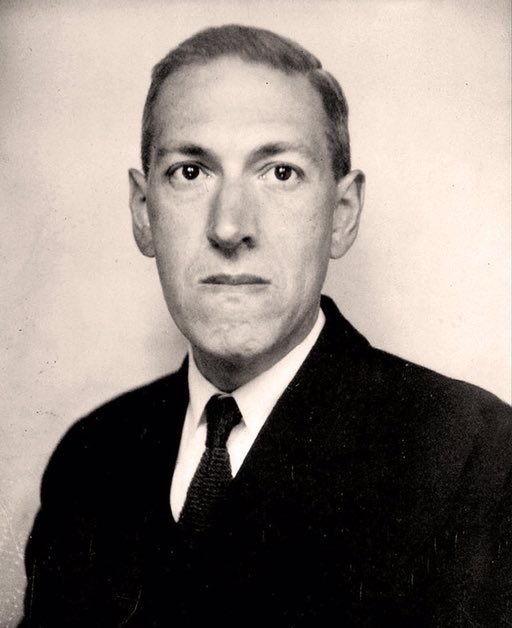
Howard Phillips Lovecraft [ˈhaʊɝd ˈfɪlɪps ˈlʌvkɹæft], né le 20 août 1890 à Providence et mort le 15 mars 1937 dans la même ville, est un écrivain américain connu pour ses récits fantastiques, d'horreur et de science-fiction.
Ses sources d'inspiration, tout comme ses créations, se réfèrent à la notion d'horreur cosmique, selon laquelle l'être humain est insignifiant à l'échelle du cosmos qui lui est profondément étranger. Ceux qui raisonnent véritablement, comme ses protagonistes, mettent toujours en péril leur santé mentale. On lit souvent Lovecraft pour le mythe qu’il a créé, le mythe de Cthulhu, pour employer l’expression d’August Derleth : l'ensemble des mythes de l'univers de Lovecraft constituaient pour l'auteur une sorte de « panthéon noir », une « mythologie synthétique » ou un « cycle de folklore synthétique ». Il voulait montrer essentiellement que le cosmos n’est pas anthropocentrique, que l’être humain, forme de vie insignifiante parmi d’autres, est loin de tenir une place privilégiée dans la hiérarchie infinie des formes de vie. Ses travaux sont profondément pessimistes et cyniques et remettent en question le Siècle des Lumières, le romantisme ainsi que l'humanisme chrétien,. Les héros de Lovecraft éprouvent en général des sentiments qui sont à l'opposé de la gnose et du mysticisme au moment où, involontairement, ils ont un aperçu de l'horreur de la réalité.
Bien que le lectorat de Lovecraft fût limité de son vivant, sa réputation évolua au fil des décennies et il est à présent considéré comme l'un des écrivains d'horreur les plus influents du XXe siècle. Avec Edgar Allan Poe, il a exercé « une influence considérable sur les générations suivantes d'écrivains d'horreur ».
Stephen King a dit de lui qu'il était « le plus grand artisan du récit classique d'horreur du vingtième siècle »,. Wikipedia
H. P. Lovecraft livre The Call of Cthulhu and Other Weird Stories
The Call of Cthulhu and Other Weird Stories
Letter to James F. Morton (6 November 1930), in Selected Letters III, 1929-1931 edited by August Derleth and Donald Wandrei, p. 208
Non-Fiction, Letters, to James Ferdinand Morton, Jr.
Letter to August Derleth (1929), quoted in "H.P. Lovecraft, a Life" by S.T. Joshi, p. 307
Non-Fiction, Letters, to August Derleth
Letter to Maurice W. Moe (16 January 1915), in Selected Letters I, 1911-1924 edited by August Derleth and Donald Wandrei, p. 10
Non-Fiction, Letters
Letter to C.L. Moore (August 1936), quoted in "H.P. Lovecraft, a Life" by S.T. Joshi, p. 574
Non-Fiction, Letters
"The Defence Remains Open!" (April 1921), published in Collected Essays, Volume 5: Philosophy edited by S. T. Joshi, p. 54
Non-Fiction
Fiction, Hypnos (1922)
But both recognise the limitations of possibility.
Letter to Woodburn Harris (25 February-1 March 1929), in Selected Letters II, 1925-1929 edited by August Derleth and Donald Wandrei, pp. 289-290
Non-Fiction, Letters
Letter to Frank Belknap Long (27 February 1931), in Selected Letters III, 1929-1931 edited by August Derleth and Donald Wandrei, p. 291
Non-Fiction, Letters, to Frank Belknap Long
Letter to C.L. Moore (c. mid-October 1936), quoted in "H.P. Lovecraft, a Life" by S.T. Joshi, p. 566
Non-Fiction, Letters
Letter to E. Hoffmann Price (29 July 1936), published in Selected Letters Vol. V, p. 290
Non-Fiction, Letters, to E. Hoffmann Price
Letter to Woodburn Harris (25 February-1 March 1929), quoted in "H.P. Lovecraft, a Life" by S.T. Joshi, p. 487
Non-Fiction, Letters
Letter to James F. Morton (1929), quoted in "H.P. Lovecraft, a Life" by S.T. Joshi, p. 483
Non-Fiction, Letters, to James Ferdinand Morton, Jr.
However, that wouldn't work in Poland or New York City, where the Jews are of an inferior strain, & so numerous that they would essentially modify the physical type.
Letter to Natalie H. Wooley (22 November 1934), in Selected Letters V, 1934-1937 edited by August Derleth and Donald Wandrei, p. 77
Non-Fiction, Letters
Letter to Frank Belknap Long (27 February 1931), in Selected Letters III, 1929-1931 edited by August Derleth and Donald Wandrei, p. 307
Non-Fiction, Letters, to Frank Belknap Long
Letter to E. Hoffman Price (29 September 1933), quoted in "H.P. Lovecraft, a Life" by S.T. Joshi, p. 579
Non-Fiction, Letters, to E. Hoffmann Price
Fiction, The Call of Cthulhu (1926)
H.P. Lovecraft livre Supernatural Horror in Literature
"Supernatural Horror in Literature" (1927)
Non-Fiction
Letter to Frank Belknap Long (27 February 1931), in Selected Letters III, 1929-1931 edited by August Derleth and Donald Wandrei, p. 312
Non-Fiction, Letters, to Frank Belknap Long
Fiction, The Call of Cthulhu (1926)
Fiction, The Crawling Chaos (1921)
Unpublished (and probably unsent) letter to the Providence Journal (13 April 1934), quoted in Collected Essays, Volume 5: Philosophy, edited by J. T. Joshi, pp. 115-116
Non-Fiction, Letters
Hitherto it has grown out of the secure, non-struggling life of the aristocrat. In future it may be expected to grow out of the secure and not-so-struggling life of whatever citizens are personally able to develop it. There need be no attempt to drag culture down to the level of crude minds. That, indeed, would be something to fight tooth and nail! With economic opportunities artificially regulated, we may well let other interests follow a natural course. Inherent differences in people and in tastes will create different social-cultural classes as in the past—although the relation of these classes to the holding of material resources will be less fixed than in the capitalistic age now closing. All this, of course, is directly contrary to Belknap's rampant Stalinism—but I'm telling you I'm no bolshevik! I am for the preservation of all values worth preserving—and for the maintenance of complete cultural continuity with the Western-European mainstream. Don't fancy that the dethronement of certain purely economic concepts means an abrupt break in that stream. Rather does it mean a return to art impulses typically aristocratic (that is, disinterested, leisurely, non-ulterior) rather than bourgeois.
Letter to Clark Ashton Smith (28 October 1934), in Selected Letters V, 1934-1937 edited by August Derleth and Donald Wandrei, pp. 60-64
Non-Fiction, Letters
Fiction, Hypnos (1922)
Letter to Weird Tales editor Edwin Baird printed in Weird Tales 3, no. 3 (March 1924), pp. 89-92. Quoted in Lord of a Visible World: An Autobiography in Letters edited by S. T. Joshi, p. 122
Non-Fiction, Letters
Fiction, The Call of Cthulhu (1926)
Letter to James F. Morton (8 March 1923), in Selected Letters I, 1911-1924 edited by August Derleth and Donald Wandrei, pp. 211-212
Non-Fiction, Letters
Letter to Woodburn Harris (25 February-1 March 1929), in Selected Letters II, 1925-1929 edited by August Derleth and Donald Wandrei, pp. 287-288
Non-Fiction, Letters
Letter to Maurice W. Moe (15 May 1918), in Selected Letters I, 1911-1924 edited by August Derleth and Donald Wandrei, p. 60
Non-Fiction, Letters
"Some Notes on Interplanetary Fiction", Californian 3, No. 3 (Winter 1935): 39-42. Published in Collected Essays, Volume 2: Literary Criticism edited by S. T. Joshi, p. 178
Non-Fiction


