H. P. Lovecraft livre The Call of Cthulhu and Other Weird Stories
The Call of Cthulhu and Other Weird Stories
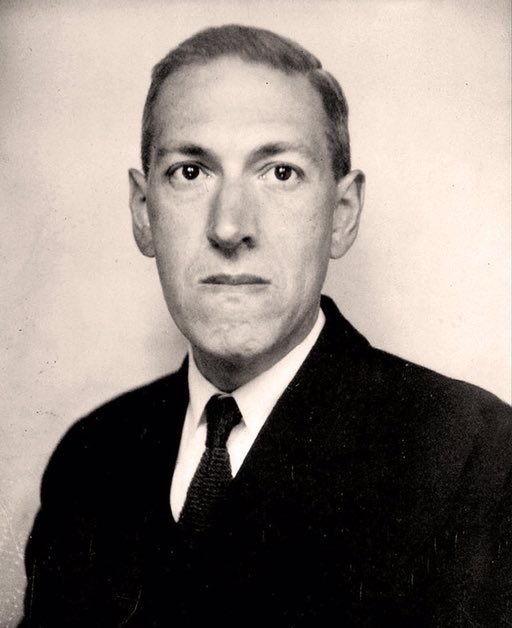
Howard Phillips Lovecraft [ˈhaʊɝd ˈfɪlɪps ˈlʌvkɹæft], né le 20 août 1890 à Providence et mort le 15 mars 1937 dans la même ville, est un écrivain américain connu pour ses récits fantastiques, d'horreur et de science-fiction.
Ses sources d'inspiration, tout comme ses créations, se réfèrent à la notion d'horreur cosmique, selon laquelle l'être humain est insignifiant à l'échelle du cosmos qui lui est profondément étranger. Ceux qui raisonnent véritablement, comme ses protagonistes, mettent toujours en péril leur santé mentale. On lit souvent Lovecraft pour le mythe qu’il a créé, le mythe de Cthulhu, pour employer l’expression d’August Derleth : l'ensemble des mythes de l'univers de Lovecraft constituaient pour l'auteur une sorte de « panthéon noir », une « mythologie synthétique » ou un « cycle de folklore synthétique ». Il voulait montrer essentiellement que le cosmos n’est pas anthropocentrique, que l’être humain, forme de vie insignifiante parmi d’autres, est loin de tenir une place privilégiée dans la hiérarchie infinie des formes de vie. Ses travaux sont profondément pessimistes et cyniques et remettent en question le Siècle des Lumières, le romantisme ainsi que l'humanisme chrétien,. Les héros de Lovecraft éprouvent en général des sentiments qui sont à l'opposé de la gnose et du mysticisme au moment où, involontairement, ils ont un aperçu de l'horreur de la réalité.
Bien que le lectorat de Lovecraft fût limité de son vivant, sa réputation évolua au fil des décennies et il est à présent considéré comme l'un des écrivains d'horreur les plus influents du XXe siècle. Avec Edgar Allan Poe, il a exercé « une influence considérable sur les générations suivantes d'écrivains d'horreur ».
Stephen King a dit de lui qu'il était « le plus grand artisan du récit classique d'horreur du vingtième siècle »,. Wikipedia
H. P. Lovecraft livre The Call of Cthulhu and Other Weird Stories
The Call of Cthulhu and Other Weird Stories
Letter to Robert E. Howard (7 November 1932), in Selected Letters 1932-1934 edited by August Derleth and Donald Wandrei, p. 102
Non-Fiction, Letters
Letter to Elizabeth Toldridge (9 October 1931), in Selected Letters III, 1929-1931 edited by August Derleth and Donald Wandrei, p. 423
Non-Fiction, Letters
Orignially written as part of an "Essay on Modern Poets" this was published as a "Fragment on Whitman” (c. 1912) in The Ancient Track (2001) edited by S. T. Joshi, p. 192
Non-Fiction
Letter to Reinhardt Kleiner (7 March 1920), in Selected Letters I, 1911-1924 edited by August Derleth and Donald Wandrei, p. 110
Non-Fiction, Letters
Letter to James F. Morton (10 February 1923), published in Selected Letters Vol. I (1965), p. 208
Non-Fiction, Letters, to James Ferdinand Morton, Jr.
the scattered plasticity of that nameless sky-spawn was nebulously recombining in its hateful original form...
Fiction, The Call of Cthulhu (1926)
The Allowable Rhyme (1915)
Non-Fiction
Letter to James F. Morton (6 November 1930), in Selected Letters III, 1929-1931 edited by August Derleth and Donald Wandrei, p. 207
Non-Fiction, Letters, to James Ferdinand Morton, Jr.
Fiction, The Crawling Chaos (1921)
H.P. Lovecraft livre Pickman's Model
"Pickman's Model " - written 1926; first published in Weird Tales, Vol. 10, No. 4 (October 1927)
Fiction
Response to observations made in In A Minor Key by Charles D. Isaacson, in The Conservative, Vol. I, No. 2, (1915), p. 4
Non-Fiction
H.P. Lovecraft livre Facts Concerning the Late Arthur Jermyn and His Family
"Facts Concerning the Late Arthur Jermyn and His Family" - written 1920; first published in The Wolverine, No. 9 (March 1921)
Fiction
Fiction, The Other Gods (1921)
At the Root (1918)
Non-Fiction
H.P. Lovecraft livre Under the Pyramids
"Imprisoned with the Pharaohs" - Written February 1924, published May-June-July 1924 in Weird Tales
Fiction
Letter to Frank Belknap Long (27 February 1931), in Selected Letters III, 1929-1931 edited by August Derleth and Donald Wandrei, p. 293
Non-Fiction, Letters, to Frank Belknap Long
Attributed to Lovecraft by Harold Farnese, who corresponded with Lovecraft briefly, later presented by August Derleth as a direct quote; but as discussed on this page http://www.hplovecraft.com/life/myths.aspx#blackmagic, Farnese's letters to Derleth suggested he tended to paraphrase things Lovecraft had written to him, going by memory rather than referring to letters he had on hand. More details in "The Origin of Lovecraft’s 'Black Magic' Quote" by David E. Schultz, *Crypt of Cthulhu*, issue 48. <br class="br">Disputed
Letter to Jennie K. Plaiser (8 July 1936), quoted in "H.P. Lovecraft, a Life" by S.T. Joshi, p. 564
Non-Fiction, Letters
“Disintegration is quite painless, I assure you.”
H.P. Lovecraft livre From Beyond
"From Beyond"
Fiction
“We must stop thinking primarily in terms of “money” and “business””
both artificial things—and begin to think increasingly in terms of the actual resources and products on which “money” and “business” are based. In terms of these, of the human beings to whom they are to be distributed, and of the cognate human values which make the accidents of life and consciousness worth enduring.
"Some Repetitions on the Times", (1933). Reprinted in Miscellaneous Writings, edited by S.T. Joshi. Arkham House, 1995.
Non-Fiction


