“He calls drunkenness an expression identical with ruin.”
Pythagoras, 6.
The Lives and Opinions of Eminent Philosophers (c. 200 A.D.), Book 8: Pythagoras and the Pythagoreans
Diogène Laërce est un poète, un doxographe et un biographe du début du IIIe siècle.
On sait peu de choses sur Diogène Laërce. Le fait est d'autant plus ironique qu'il représente souvent l'unique source que nous ayons sur la vie et les doctrines de nombreux philosophes. C'est, par exemple, uniquement par lui que nous connaissons les lettres d'Épicure et ses maximes capitales, ainsi que les testaments de certains philosophes. Certains de ses écrits restent sujets à caution, car il cite par exemple une lettre de Pisistrate à Solon et une réponse de Solon à Pisistrate considérées comme apocryphes.
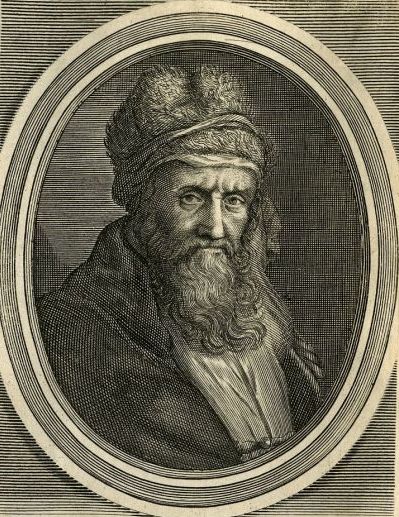
“He calls drunkenness an expression identical with ruin.”
Pythagoras, 6.
The Lives and Opinions of Eminent Philosophers (c. 200 A.D.), Book 8: Pythagoras and the Pythagoreans
“Ignorance plays the chief part among men, and the multitude of words.”
Cleobulus, 4.
The Lives and Opinions of Eminent Philosophers (c. 200 A.D.), Book 1: The Seven Sages
Bion, 3.
The Lives and Opinions of Eminent Philosophers (c. 200 A.D.), Book 4: The Academy
Aristotle, 9.
The Lives and Opinions of Eminent Philosophers (c. 200 A.D.), Book 5: The Peripatetics
“When asked what he would take to let a man give him a blow on the head, he said, "A helmet."”
Diogenes, 6.
The Lives and Opinions of Eminent Philosophers (c. 200 A.D.), Book 6: The Cynics
“When Zeno was asked what a friend was, he replied, "Another I."”
Zeno, 19.
The Lives and Opinions of Eminent Philosophers (c. 200 A.D.), Book 7: The Stoics
“Bion used to say that the way to the shades below was easy; he could go there with his eyes shut.”
Bion, 3.
The Lives and Opinions of Eminent Philosophers (c. 200 A.D.), Book 4: The Academy
“In the time of Pythagoras that proverbial phrase Ipse dixit was introduced into ordinary life.”
Pythagoras, 25.
The Lives and Opinions of Eminent Philosophers (c. 200 A.D.), Book 8: Pythagoras and the Pythagoreans
“That virtue was sufficient of herself for happiness.”
Plato, 42.
The Lives and Opinions of Eminent Philosophers (c. 200 A.D.), Book 3: Plato
“Time is the image of eternity.”
Plato, 41.
The Lives and Opinions of Eminent Philosophers (c. 200 A.D.), Book 3: Plato
“He declared that he knew nothing, except the fact of his ignorance.”
Socrates, 16.
The Lives and Opinions of Eminent Philosophers (c. 200 A.D.), Book 2: Socrates, his predecessors and followers
Menedemus, 3.
The Lives and Opinions of Eminent Philosophers (c. 200 A.D.), Book 6: The Cynics
“All things are in common among friends.”
Diogenes, 6.
The Lives and Opinions of Eminent Philosophers (c. 200 A.D.), Book 6: The Cynics
Epimenides, 2.
The Lives and Opinions of Eminent Philosophers (c. 200 A.D.), Book 2: Socrates, his predecessors and followers
Bias, 5.
The Lives and Opinions of Eminent Philosophers (c. 200 A.D.), Book 1: The Seven Sages
Diogenes, 6.
The Lives and Opinions of Eminent Philosophers (c. 200 A.D.), Book 6: The Cynics
“The chief good he has defined to be the exercise of virtue in a perfect life.”
Aristotle, 13.
The Lives and Opinions of Eminent Philosophers (c. 200 A.D.), Book 5: The Peripatetics
“He alludes to the appearance of a face in the orb of the moon.”
Epicurus, 25.
The Lives and Opinions of Eminent Philosophers (c. 200 A.D.), Book 10: Epicurus
“One of the sophisms of Chrysippus was, "If you have not lost a thing, you have it."”
Chrysippus, 11.
The Lives and Opinions of Eminent Philosophers (c. 200 A.D.), Book 7: The Stoics
Aristotle, 9.
The Lives and Opinions of Eminent Philosophers (c. 200 A.D.), Book 5: The Peripatetics
“Fortune is unstable, while our will is free.”
Epicurus, 27.
The Lives and Opinions of Eminent Philosophers (c. 200 A.D.), Book 10: Epicurus
Pyrrho, 8.
The Lives and Opinions of Eminent Philosophers (c. 200 A.D.), Book 9: Uncategorized philosophers and Skeptics
Solon, 10.
The Lives and Opinions of Eminent Philosophers (c. 200 A.D.), Book 1: The Seven Sages
“Chilo advised, "not to speak evil of the dead."”
Chilo, 2.
The Lives and Opinions of Eminent Philosophers (c. 200 A.D.), Book 1: The Seven Sages
Aristotle, 9.
The Lives and Opinions of Eminent Philosophers (c. 200 A.D.), Book 5: The Peripatetics
Diogenes, 6.
The Lives and Opinions of Eminent Philosophers (c. 200 A.D.), Book 6: The Cynics
Anarcharsis, 5.
The Lives and Opinions of Eminent Philosophers (c. 200 A.D.), Book 2: Socrates, his predecessors and followers
“One of his sayings was, "Even the gods cannot strive against necessity."”
Pittacus, 4.
The Lives and Opinions of Eminent Philosophers (c. 200 A.D.), Book 1: The Seven Sages
Pythagoras, 17.
The Lives and Opinions of Eminent Philosophers (c. 200 A.D.), Book 8: Pythagoras and the Pythagoreans
Myson, 3.
The Lives and Opinions of Eminent Philosophers (c. 200 A.D.), Book 2: Socrates, his predecessors and followers


