Yasunari Kawabata citations
Page 2

Yasunari Kawabata , né le 11 juin 1899 à Osaka, et mort le 16 avril 1972 à Zushi, est un écrivain japonais, prix Nobel de littérature en 1968.

Considéré comme un écrivain majeur du XXe siècle et obsédé par la quête du beau, la solitude et la mort, il a écrit en particulier des récits très courts, d'un dépouillement stylistique extrême, regroupés plus tard en recueils, mais ses œuvres les plus connues internationalement sont ses romans comme Pays de neige , Le Grondement de la montagne ou Les Belles Endormies . Wikipedia  

✵ 11. juin 1899 – 16. avril 1972
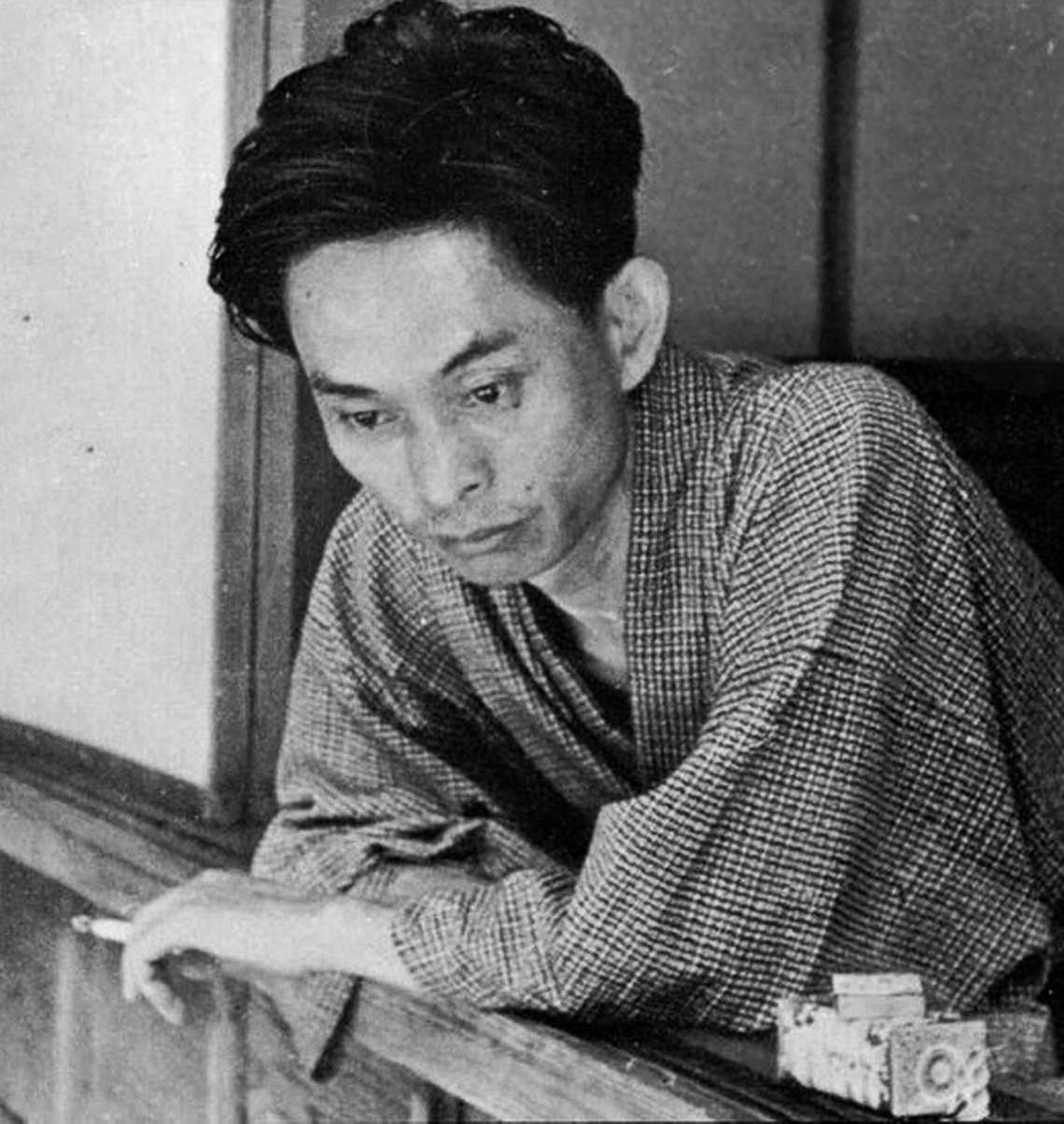
Yasunari Kawabata photo
Yasunari Kawabata: 44 citations0 J'aime

Yasunari Kawabata: Citations en anglais

“The train came out of the long border tunnel — and there was the snow country. The night had turned white.”

Yasunari Kawabata livre Snow Country

First lines (as translated by Edward Seidensticker).
Snow Country (1948)

“"Among those who give thoughts to things, is there one who does not think of suicide?" With me was the knowledge that that fellow Ikkyu twice contemplated suicide. I have "that fellow", because the priest Ikkyu is known even to children as a most amusing person, and because anecdotes about his limitlessly eccentric behavior have come down to us in ample numbers. It is said of him that children climbed his knee to stroke his beard, that wild birds took feed from his hand. It would seem from all this that he was the ultimate in mindlessness, that he was an approachable and gentle sort of priest. As a matter of fact he was the most severe and profound of Zen priests. Said to have been the son of an emperor, he entered a temple at the age of six, and early showed his genius as a poetic prodigy. At the same time he was troubled with the deepest of doubts about religion and life. "If there is a god, let him help me. If there is none, let me throw myself to the bottom of the lake and become food for fishes." Leaving behind these words he sought to throw himself into a lake, but was held back. … He gave his collected poetry the title "Collection of the Roiling Clouds", and himself used the expression "Roiling Clouds" as a pen name. In his collection and its successor are poems quite without parallel in the Chinese and especially the Zen poetry of the Japanese middle ages, erotic poems and poems about the secrets of the bedchamber that leave one in utter astonishment. He sought, by eating fish and drinking spirits and having commerce with women, to go beyond the rules and proscriptions of the Zen of his day, and to seek liberation from them, and thus, turning against established religious forms, he sought in the pursuit of Zen the revival and affirmation of the essence of life, of human existence, in a day civil war and moral collapse.”

Yasunari Kawabata

Japan, the Beautiful and Myself (1969)

Auteurs similaires

Haruki Murakami photo
Haruki Murakami21
écrivain japonais None
Yukio Mishima photo
Yukio Mishima2
auteur japonais None
Vladimir Nabokov photo
Vladimir Nabokov39
écrivain None
Richard Bach photo
Richard Bach8
écrivain américain None
Cesare Pavese photo
Cesare Pavese6
écrivain italien None
Kurt Vonnegut photo
Kurt Vonnegut29
écrivain américain None
Wole Soyinka photo
Wole Soyinka6
écrivain nigérian None
Imre Kertész photo
Imre Kertész68
écrivain hongrois None
Camilo José Cela photo
Camilo José Cela5
écrivain espagnol None
Alexandre Soljenitsyne photo
Alexandre Soljenitsyne20
écrivain russe None