“Just at the age 'twixt boy and youth,
When thought is speech, and speech is truth.”
Walter Scott Marmion
Canto II, introduction.
Marmion (1808)
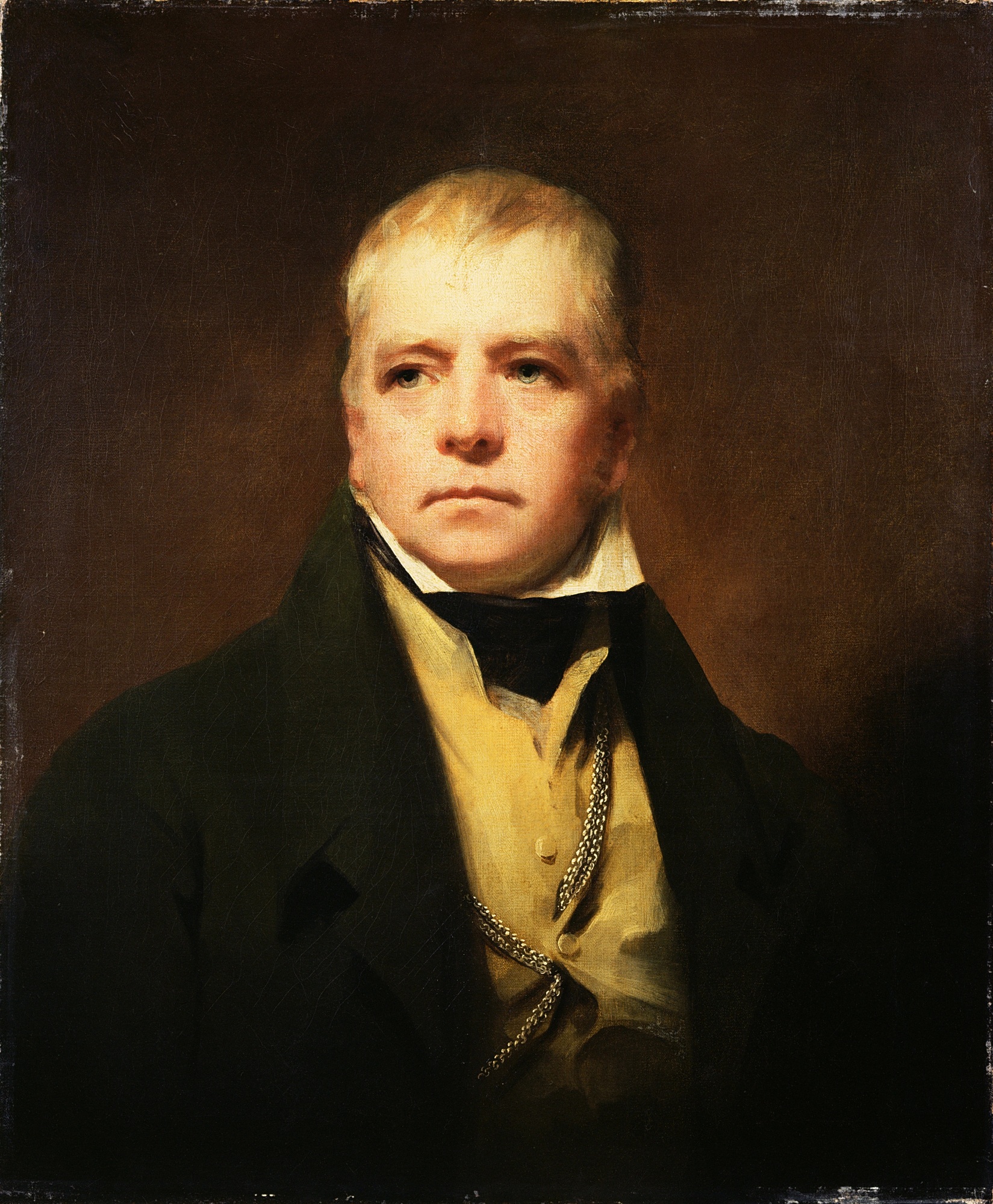
Walter Scott est un poète, écrivain et historien écossais né le 15 août 1771 à Édimbourg et mort le 21 septembre 1832 à Abbotsford.
Avocat de formation, amateur d'antiquités, il parcourt d'abord l'Écosse, à la recherche de son passé. Au tournant des XVIIIe et XIXe siècles, il se lance dans la littérature, publiant des textes anciens ou appartenant à la tradition populaire ainsi que des poèmes de son cru, comme La Dame du lac. Puis, devant la gloire montante de Lord Byron, il se tourne vers le roman écossais , avant d'évoluer vers le roman historique, avec Ivanhoé et Quentin Durward .
C'est l'un des plus célèbres auteurs écossais avec David Hume de Godscroft, David Hume, Adam Smith, Robert Burns ou Robert Louis Stevenson. Il est également, avec Wordsworth, Coleridge, Byron, Shelley ou Keats, l'une des plus illustres figures du romantisme britannique. Il est aussi un des représentants du roman historique, il a contribué à forger une image romantique de l'Écosse et de son histoire. C'est à lui, notamment, que l'on doit le retour de l'usage du tartan et du kilt, dont le port avait été interdit par une loi du Parlement en 1746. Wikipedia
“Just at the age 'twixt boy and youth,
When thought is speech, and speech is truth.”
Walter Scott Marmion
Canto II, introduction.
Marmion (1808)
Walter Scott The Lay of the Last Minstrel
Canto IV, conclusion
The Lay of the Last Minstrel (1805)
Walter Scott livre Woodstock
Woodstock, Chap. xxxvii.
Bartlett's Familiar Quotations, 10th ed. (1919)
Walter Scott The Lord of the Isles
Canto IV, stanza 13.
The Lord of the Isles (1815)
Canto III, stanza 16 (Coronach, stanza 3). <br class="br"> The Lady of the Lake http://www.gutenberg.org/etext/3011 (1810)
“Come one, come all! this rock shall fly
From its firm base as soon as I.”
Canto V, stanza 10. <br class="br"> The Lady of the Lake http://www.gutenberg.org/etext/3011 (1810)
Canto I, stanza 17. <br class="br"> The Lady of the Lake http://www.gutenberg.org/etext/3011 (1810)
Walter Scott The Lay of the Last Minstrel
Canto VI, stanza 1.
The Lay of the Last Minstrel (1805)
Walter Scott The Lay of the Last Minstrel
Canto VI, stanza 2.
The Lay of the Last Minstrel (1805)
Walter Scott The Lay of the Last Minstrel
Canto VI, stanza 31.
The Lay of the Last Minstrel (1805)
“Women are but the toys which amuse our lighter hours-ambition is the serious business of life.”
Walter Scott livre Ivanhoe
Source: Ivanhoe (1819), Ch. 36, Malvoisin speaking to De Bois-Guilbert.
“My foot is on my native heath, and my name is MacGregor.”
Walter Scott livre Rob Roy
Source: Rob Roy (1817), Chapter 34.
Walter Scott livre Woodstock
Woodstock (1826), Ch.1.
Walter Scott The Lay of the Last Minstrel
Canto V, stanza 1.
The Lay of the Last Minstrel (1805)
“It is a strong castle, and strongly guarded; but there is no impossibility to brave men.”
Walter Scott livre Quentin Durward
Quentin Durward (1823), Ch. 3.
“Woman's faith and woman's trust,
Write the characters in dust.”
Walter Scott livre The Betrothed
The Betrothed, Chap. xx.
Bartlett's Familiar Quotations, 10th ed. (1919)
Walter Scott livre Ivanhoe
Source: Ivanhoe (1819), Ch. 39, De Bois-Guilbert speaking to Rebecca.
Walter Scott Marmion
Canto VI, introduction, st. 3.
Marmion (1808)
“When Prussia hurried to the field,
And snatch'd the spear, but left the shield.”
Walter Scott Marmion
Canto III, introduction.
Marmion (1808)
“Where's the coward that would not dare
To fight for such a land?”
Walter Scott Marmion
Canto IV, stanza 30.
Marmion (1808)
Walter Scott livre The Monastery
Source: The Monastery (1820), Ch. 9.
“Widowed wife and wedded maid.”
Walter Scott livre The Betrothed
The Betrothed, Chap. xv.
Bartlett's Familiar Quotations, 10th ed. (1919)
Walter Scott livre The Betrothed
The The Betrothed (1825), Volume I, Chapter XIII http://books.google.com/books?id=3w8OAAAAQAAJ&q=%22Too+much+rest+is+rust%22&pg=PA226#v=onepage


