W. H. Auden livre The Dyer's Hand
"Interlude: West's Disease", p. 241
The Dyer's Hand, and Other Essays (1962)
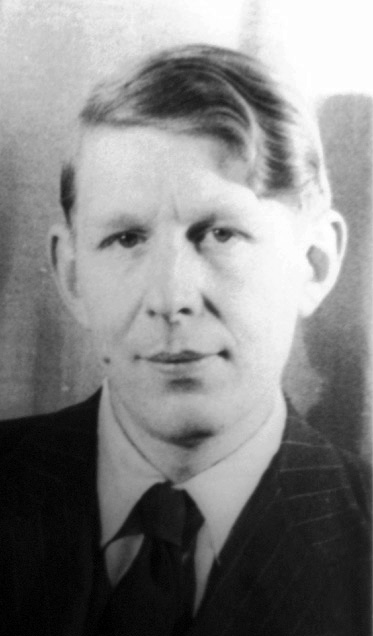
Wystan Hugh Auden, plus connu sous la signature W. H. Auden est un poète, essayiste, dramaturge, librettiste et critique d'origine britannique, considéré comme l’un des plus importants et influents poètes du XXe siècle.
Il a vécu la première partie de sa vie au Royaume-Uni puis a émigré aux États-Unis en 1939 et est devenu citoyen américain en 1946. Il est élu Chancelier de l'Academy of American Poets en 1954, il occupera cette charge jusqu'en 1973. Wikipedia
W. H. Auden livre The Dyer's Hand
"Interlude: West's Disease", p. 241
The Dyer's Hand, and Other Essays (1962)
W. H. Auden September 1, 1939
Source: September 1, 1939 (1939), Lines 78–88; for a 1955 anthology text the poet changed this line to "We must love one another and die" to avoid what he regarded as a falsehood in the original.
“Minus times minus equals plus,
The reason for this we need not discuss.”
As stated in "The Poet Himself" http://query.nytimes.com/gst/fullpage.html?res=9F01E6D81539F937A35753C1A967948260 by Paul Fussell, in The New York Times (4 October 1981), these lines were a "math mnemonic" which Auden "had to memorize as a child." <br class="br">Misattributed
As I Walked Out One Evening (1937)
Base words are uttered (1940), lines 1–5
W. H. Auden livre Spain
Source: Spain (1937), Lines 65–76
“The windiest militant trash
Important Persons shout
Is not so crude as our wish.”
W. H. Auden September 1, 1939
Source: September 1, 1939 (1939), Lines 56–58
Source: In Memory of W.B. Yeats (1939), Lines 66–77
W. H. Auden livre The Shield of Achilles
The Shield of Achilles (1952)
W. H. Auden livre The Dyer's Hand
"Don Juan", p. 403
The Dyer's Hand, and Other Essays (1962)
Source: In Memory of W.B. Yeats (1939), Lines 10–23
W. H. Auden livre The Dyer's Hand
"The Poet & The City", p. 84
The Dyer's Hand, and Other Essays (1962)
Look, Stranger, on This Island Now (1936), first published in book form in Look, Stranger! (1936; US title On this Island)
After Reading a Child's Guide to Modern Physics (1961), lines 9–16
W. H. Auden livre Forewords and Afterwords
"Markings", p. 438
Forewords and Afterwords (1973)
W. H. Auden livre Spain
Source: Spain (1937), Lines 33–44
W. H. Auden livre The Dyer's Hand
Interlude: West's Disease", p. 245
The Dyer's Hand, and Other Essays (1962)
W. H. Auden livre The Dyer's Hand
"Writing", p. 22
The Dyer's Hand, and Other Essays (1962)
W. H. Auden livre The Dyer's Hand
"Interlude: West's Disease", p. 243
The Dyer's Hand, and Other Essays (1962)
Reported by Lionel Trilling in "On the Modern Element in Modern Literature", Partisan Review, January-February 1961, p. 15 (reprinted in Trilling's Beyond Culture, 1965): Trilling wrote: "taking the cue of W. H. Auden's remark that a real book reads us, I have been read by Eliot's poems...".
More commonly reported as "a real book is not one that we read but one that reads us". This paraphrase of Trilling's reported quotation first appeared in a review by Robie Macauley of Trilling's Beyond Culture in the New York Times Book Review, 14 November 1965, p. 38: "I must borrow a phrase from Mr. Trilling (who borrows it from W. H. Auden): a real book is not one that we read but one that reads us." The same version, attributed to Auden, appears in Evan Esar, 20,000 Quips & Quotes (1968), p. 87 (with a comma after "we read"). There is no evidence that Auden ever wrote or said this version of the phrase.
Other variations (e.g. "not one that's read" for "not one that we read") seem to be misrecollections of Robie Macaulay's paraphrase.
Reported quotations
W. H. Auden livre The Dyer's Hand
but these are very crude, constantly breaking down, and liable to injure the cook. Literary composition in the twentieth century A.D. is pretty much what it was in the twentieth century B.C.: nearly everything has still to be done by hand.
"Writing", p. 17
The Dyer's Hand, and Other Essays (1962)
W. H. Auden livre The Dyer's Hand
When all he has to do is press a switch, it is more difficult. He may easily come to believe that wishes can come true.
Interlude: West's Disease", p. 245
The Dyer's Hand, and Other Essays (1962)
W. H. Auden livre The Dyer's Hand
And the poor patient in his delirium cries: "Please sing me a song which will give me sweet dreams instead of nightmares. If you succeed, I will give you a penthouse in New York or a ranch in Arizona."
"Writing", p. 27
The Dyer's Hand, and Other Essays (1962)
W. H. Auden livre Spain
<p> And the nations combine each cry, invoking the life
That shapes the individual belly and orders
The private nocturnal terror:
"Did you not found the city state of the sponge,<p>"Raise the vast military empires of the shark
And the tiger, establish the robin's plucky canton?
Intervene. Descend as a dove or
A furious papa or a mild engineer, but descend."
Source: Spain (1937), Lines 33–44


