Cette traduction est en attente de révision. Est-ce correct?
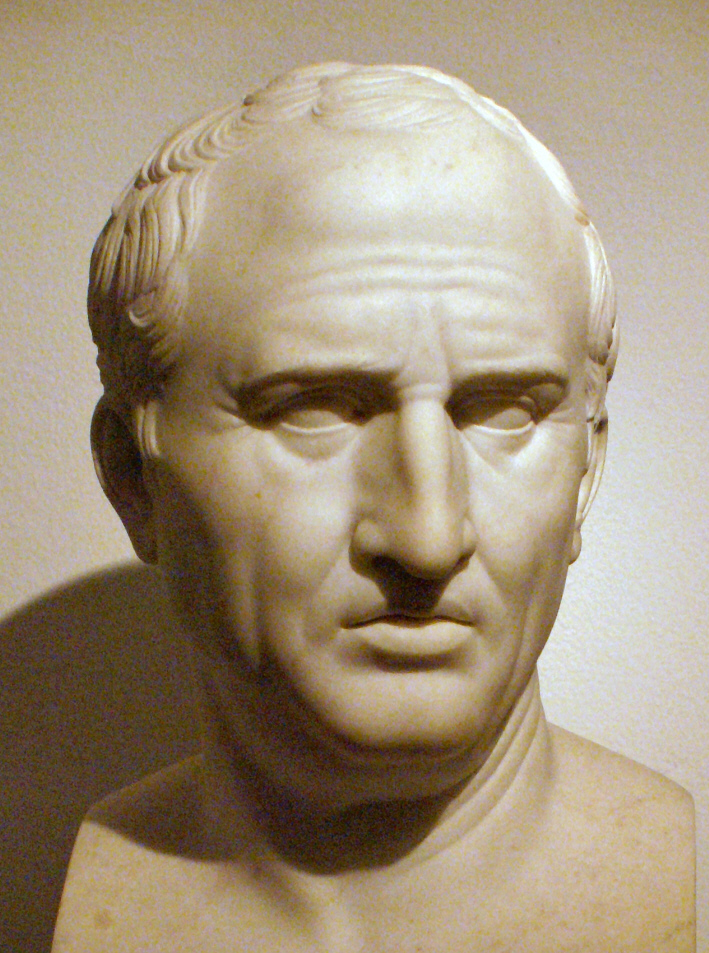
Cicéron: 199 citations6 J'aime
Cicéron citations célèbres
“Jusques à quand donc, Catilina, abuseras-tu de notre patience?”
Quousque tandem abutere, Catilina, patientia nostra?
la
Catilinaires
Cicéron Citations
On Duties
“Je n'aurai rien à désirer, si votre bibliothèque est accompagnée d'un jardin.”
Si hortum in bibliotheca habes, deerit nihil.
la
Traité des devoirs
Traité des devoirs
Cicéron: Citations en anglais
“Thus they are destitute of that very lovely and exquisitely natural friendship, which is an object of desire in itself and for itself, nor can they learn from themselves how valuable and powerful such a friendship is. For each man loves himself, not that he may get from himself some reward for his own affection, but because each one is of himself dear to himself. And unless this same feeling be transferred to friendship, a true friend will never be found; for a true friend is one who is, as it were, a second self.”
Ita pulcherrima illa et maxime naturali carent amicitia per se et propter se expetita nec ipsi sibi exemplo sunt, haec vis amicitiae et qualis et quanta sit. Ipse enim se quisque diligit, non ut aliquam a se ipse mercedem exigat caritatis suae, sed quod per se sibi quisque carus est. Quod nisi idem in amicitiam transferetur, verus amicus numquam reperietur; est enim is qui est tamquam alter idem.
Section 80; translation by J. F. Stout
Laelius De Amicitia – Laelius On Friendship (44 BC)
“Law stands mute in the midst of arms.”
Silent enim leges inter arma.
Marcus Tullius Cicero Pro Milone
Pro Milone, Chapter IV, section 11. Often paraphrased as Inter arma enim silent leges.
Variant translations:
In a time of war, the law falls silent.
Laws are silent in time of war.
“Undoubtedly, as it seems to me at least, satiety of all pursuits causes satiety of life. Boyhood has certain pursuits: does youth yearn for them? Early youth has its pursuits: does the matured or so-called middle stage of life need them? Maturity, too, has such as are not even sought in old age, and finally, there are those suitable to old age. Therefore as the pleasures and pursuits of the earlier periods of life fall away, so also do those of old age; and when that happens man has his fill of life and the time is ripe for him to go.”
Omnino, ut mihi quidem videtur studiorum omnium satietas vitae facit satietatem. Sunt pueritiae studia certa: num igitur ea desiderant adulescentes? Sunt ineuntis adulescentiae: num ea constans iam requirit aetas, quae media dicitur? Sunt etiam eius aetatis: ne ea quidem quaeruntur in senectute. Sunt extrema quaedam studia senectutis: ergo, ut superiorum aetatum studia occidunt, sic occidunt etiam senectutis; quod cum evenit, satietas vitae tempus maturum mortis affert.
section 76 http://www.perseus.tufts.edu/hopper/text?doc=Perseus%3Atext%3A2007.01.0039%3Asection%3D76 <br class="br">Cato Maior de Senectute – On Old Age (44 BC)
“But of all motives, none is better adapted to secure influence and hold it fast than love; nothing is more foreign to that end than fear.”
Omnium autem rerum nec aptius est quicquam ad opes tuendas ac tenendas quam diligi nec alienius quam timeri.
Book II, section 7; translation by Walter Miller
De Officiis – On Duties (44 BC)
“Injustice often arises also through chicanery, that is, through an over-subtle and even fraudulent construction of the law. This it is that gave rise to the now familiar saw, "More law, less justice."”
Existunt etiam saepe iniuriae calumnia quadam et nimis callida sed malitiosa iuris interpretatione. Ex quo illud "summum ius summa iniuria" factum est iam tritum sermone proverbium.
Book I, section 33; translation by Walter Miller.
De Officiis – On Duties (44 BC)
“From the beginning of the world it has been ordained that certain signs must needs precede certain events.”
Sed ita a principio incohatum esse mundum, ut certis rebus certa signa praecurrerent.
Book I, Chapter LII, section 118
Compare: "Often do the spirits / Of great events stride on before the events, / And in to-day already walks to-morrow", Samuel Taylor Coleridge, The Death of Wallenstein, Act v, scene 1
De Divinatione – On Divination (44 BC)
“Yield, ye arms, to the toga; to civic praise, ye laurels.”
Cedant arma togae, concedat laurea laudi.
Book I, section 77
De Officiis – On Duties (44 BC)
“The two conditions that lead others to languor – i. e. leisure and solitude – him made sharper.”
Ita duae res, quae languorem afferunt ceteris, illum acuebant; otium et solitudo.
Book III, section 1
De Officiis – On Duties (44 BC)
“For such is the work of philosophy: it cures souls, draws off vain anxieties, confers freedom from desires, drives away fears.”
Nam efficit hoc philosophia: medetur animis, inanes sollicitudines detrahit, cupiditatibus liberat, pellit timores.
Book II, Chapter IV; translation by Andrew P. Peabody
Tusculanae Disputationes – Tusculan Disputations (45 BC)
“Philosophy is certainly the medicine of the soul. Its aid is to be sought not from without, as in diseases of the body; and we must labour with all our resources and with all our strength to cure ourselves.”
Est profecto animi medicina, philosophia; cuius auxilium non ut in corporis morbis petendum est foris, omnibusque opibus viribus, ut nosmet ipsi nobis mederi possimus, elaborandum est.
Book III, Chapter III; translation by Walter Miller
Tusculanae Disputationes – Tusculan Disputations (45 BC)
“Study carefully, the character of the one you recommend, lest their misconduct bring you shame.”
from Horace, Epistles I.xviii.76
Misattributed
“In the heavens, then, there is no chance, irregularity, deviation, or falsity, but on the other hand the utmost order, reality, method, and consistency. The things which are without these qualities, phantasmal, unreal, and erratic, move in and around the earth below the moon, which is the lowest of all the heavenly bodies. Any one, therefore, who thinks that there is no intelligence in the marvellous order of the stars and in their extraordinary regularity, from which the preservation and the entire well-being of all things proceed, ought to be considered destitute of intelligence himself.”
Nulla igitur in caelo nec fortuna nec temeritas nec erratio nec vanitas inest contraque omnis ordo veritas ratio constantia, quaeque his vacant ementita et falsa plenaque erroris, ea circum terras infra lunam, quae omnium ultima est, in terrisque versantur. caelestem ergo admirabilem ordinem incredibilemque constantiam, ex qua conservatio et salus omnium omnis oritur, qui vacare mente putat is ipse mentis expers habendus est.
Book II, section 21
De Natura Deorum – On the Nature of the Gods (45 BC)
“Almost no one dances sober, unless he is insane.”
Nemo enim fere saltat sobrius, nisi forte insanit.
Marcus Tullius Cicero livre Pro Murena
Pro Murena (Chapter VI, sec. 13)
“If a man aspires to the highest place, it is no dishonor to him to halt at the second, or even at the third.”
Prima enim sequentem honestum est in secundis tertiisque consistere. ([http://www.thelatinlibrary.com/cicero/orator.shtml#3 3])
Variant translation: If you aspire to the highest place, it is no disgrace to stop at the second, or even the third, place.
Chapter I, section 4
Orator Ad M. Brutum (46 BC)
“I say, then, that the universe and all its parts both received their first order from divine providence, and are at all times administered by it.”
Dico igitur providentia deorum mundum et omnes mundi partes et initio constitutas esse et omni tempore administrari.
Book II, section 30
De Natura Deorum – On the Nature of the Gods (45 BC)
“By force and arms.”
Vi et armis.
Philippica I
Philippicae – Philippics (44 BC)
“Force overcome by force.”
Vi victa vis.
Marcus Tullius Cicero Pro Milone
Pro Milone, Chapter XI, section 30
Variant translation: Violence conquered by violence.
“I am a Roman citizen.”
Civis Romanus sum.
Against Verres [In Verrem], part 2, book 5, section 57; reported in Cicero, The Verrine Orations, trans. L. H. G. Greenwood (1935), vol. 2, p. 629
Book III, Sect. 22, as translated by Andrew P. Peabody
De Officiis – On Duties (44 BC)
Book 5 Section 11
Tusculanae Disputationes – Tusculan Disputations (45 BC)
“So long as there is life in the sick man, it is said that there is hope.”
Marcus Tullius Cicero Epistulae ad Atticum
Epistulae ad Atticum (Letters to Atticus) Book IX, Letter X, section 3
Often paraphrased as: Dum anima est, spes est ("While there is life there is hope")
Compare: "While there's life there's hope, and only the dead have none." Theocritus, Idyll 4, line 42; as translated A. S. F. Gow
Original: (la) Aegroto dum anima est, spes esse dicitur.
“There is nothing so absurd that it has not been said by some philosopher.”
Book II, chapter LVIII, section 119
Cf. René Descartes' "On ne sauroit rien imaginer de si étranger et si peu croyable, qu'il n'ait été dit par quelqu'un des philosophes [One cannot conceive anything so strange and so implausible that it has not already been said by one philosopher or another]" (Le Discours de la Méthode, Pt. 2)
De Divinatione – On Divination (44 BC)
Original: (la) Nihil tam absurde dici potest, quod non dicatur ab aliquo philosophorum.
Oration in Defense of Flaccus. See Apostle Paul: A Polite Bribe https://books.google.com.br/books?id=wefkDwAAQBAJ&pg=108 by Robert Orlando, p. 108.
Oration in Defense of Flaccus. See Apostle Paul: A Polite Bribe https://books.google.com.br/books?id=wefkDwAAQBAJ&pg=108 by Robert Orlando, p. 108.
“Let your desires be governed by reason.”
Appetitus rationi pareat.


