John Updike livre Rabbit Remembered
Rabbit Remembered (2000)
John Hoyer Updike est un écrivain américain, auteur de romans, de nouvelles, de poésie et d'essais critiques sur l'art et la littérature. Après avoir accédé à la notoriété internationale avec son roman Le Centaure en 1963 , il rencontre un très grand succès public et critique avec sa tétralogie sur le personnage de Harry « Rabbit » Angstrom : Cœur de lièvre, Rabbit rattrapé, Rabbit est riche et Rabbit en paix, ces deux derniers volumes ayant chacun reçu le prix Pulitzer. John Updike est l'auteur de vingt-six romans et de centaines de nouvelles, de chroniques et de poèmes, travaux publiés en particulier régulièrement dans le New Yorker et la New York Review of Books, et qui ont donné lieu à plusieurs recueils. Il dépeint l'Amérique des petites villes, protestantes et bourgeoises, et accorde une importance récurrente aux thèmes universels du sexe, de la foi, de la mort, et à leurs entrelacements. Son œuvre abondante et variée, quoique souvent considérée comme inégale, vaut à John Updike d'être considéré comme l'un des écrivains américains les plus importants du XXe siècle. Wikipedia
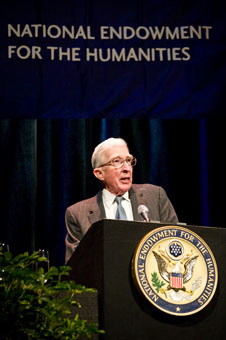
John Updike livre Rabbit Remembered
Rabbit Remembered (2000)
John Updike livre The Centaur
The Centaur (1963)
John Updike livre Rabbit Remembered
Rabbit Remembered (2000)
“Vagueness and procrastination are ever a comfort to the frail in spirit.”
John Updike livre In the Beauty of the Lilies
In the Beauty of the Lilies (1996)
“Things change," says Mr Shimada. "Is world's sad secret.”
John Updike livre Rabbit at Rest
Rabbit at Rest (1990)
"Everybody says it. The church, the government. It's against Nature, to give up, you've got to keep moving. That's the thing about you. You're not moving. You don't want to be here, selling old man Springer's jalopies. You want to be out there, learning something." He gestures toward the west. "How to hang glide, or run a computer, or whatever."
Rabbit is Rich (1981)
Quoted in George Plimpton ed Writers at Work' Viking (1976)
“We take our bearings, daily, from others. To be sane is, to a great extent, to be sociable.”
Christian Science Monitor (5 March 1979)
On Franz Kafka, quoted in report on Great Books discussion groups, New York Times (28 February 1985)
On completing a long novel, New York Times (7 April 1968)
John Updike livre Rabbit at Rest
Rabbit at Rest (1990)
John Updike livre Rabbit at Rest
Rabbit at Rest (1990)
“There's more to being a human being than having your own way.”
John Updike livre Rabbit at Rest
Rabbit at Rest (1990)
John Updike livre Rabbit at Rest
Rabbit at Rest (1990)
“[Dr Breit] "It's irrational, but so's the human species."”
John Updike livre Rabbit at Rest
Rabbit at Rest (1990)
John Updike livre Rabbit Redux
Rabbit Redux (1969)
Source: Self-Consciousness : Memoirs (1989), Ch. 4
“Religion enables us to ignore nothingness and get on with the jobs of life.”
Source: Self-Consciousness : Memoirs (1989), Ch. 6
John Updike livre Rabbit Remembered
Rabbit Remembered (2000)
John Updike livre Rabbit at Rest
Rabbit at Rest (1990)
John Updike livre Rabbit at Rest
Rabbit at Rest (1990)
John Updike livre Rabbit Redux
"Just middle-aged. Ideas used to grab me too. It's not that you get better ideas, the old ones just get tired. After a while, you see that even dollars and cents are just an idea. Finally the only thing that matters is putting some turds in the toilet bowl once a day. They stay real, somehow. Somebody came up to me and said, 'I'm God,' I'd say, 'Show me your badge.'"
Rabbit Redux (1969)
The Astronomer by John Updike from Pigeon Feathers: and other stories p. 125 1959, 1962 Ballantine Books
Act I
Buchanan Dying (1974)


