“La violence est le dernier refuge de l'incompétence.”
Violence is the last refuge of the incompetent.
en
Autres parutions
Isaac Asimov, né vers le 2 janvier 1920 à Petrovitchi et mort le 6 avril 1992 à New York aux États-Unis, est un écrivain américano-russe, naturalisé en 1928, surtout connu pour ses œuvres de science-fiction et ses livres de vulgarisation scientifique.
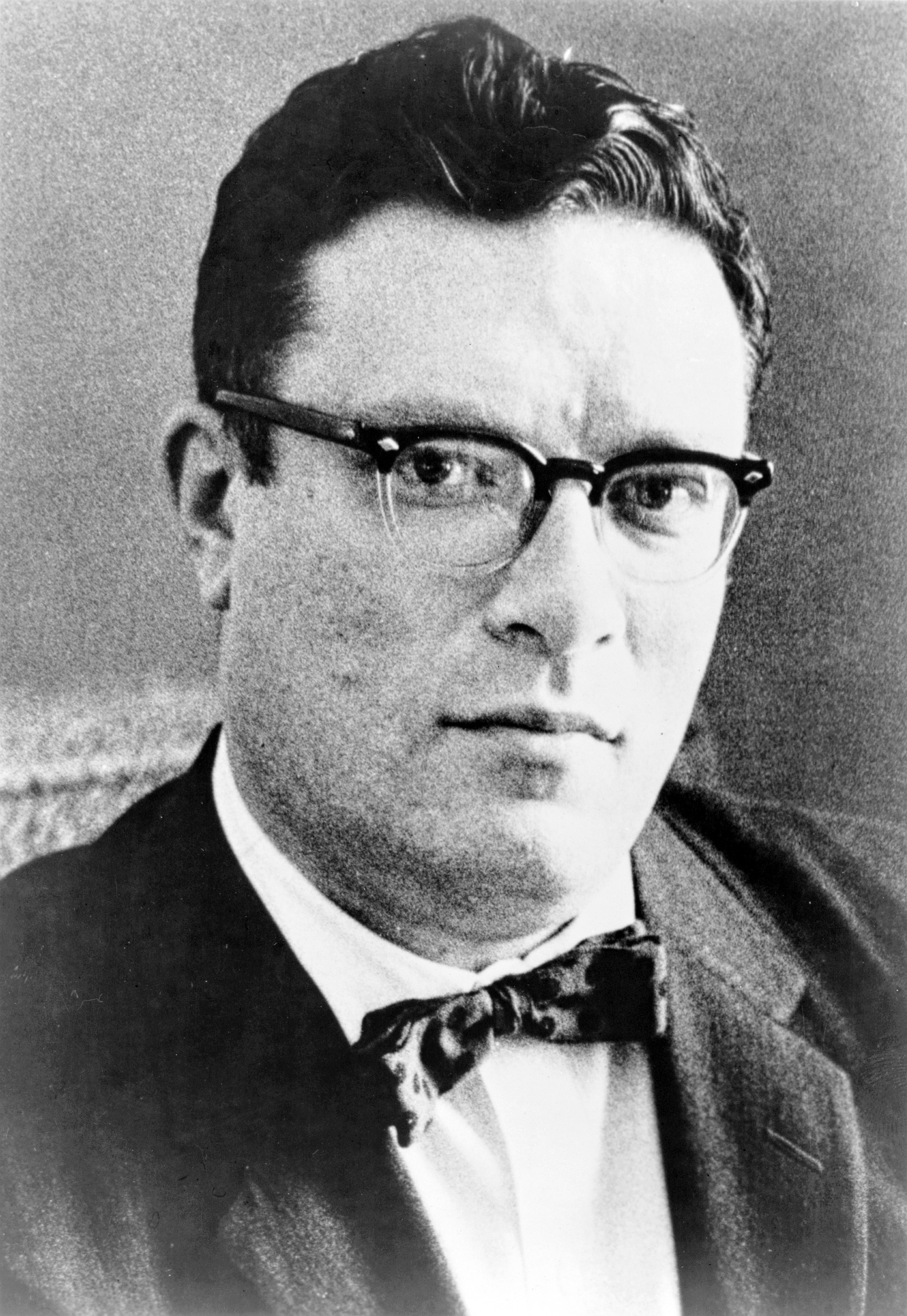
“La violence est le dernier refuge de l'incompétence.”
Violence is the last refuge of the incompetent.
en
Autres parutions
I made up my mind long ago to follow one cardinal rule in all my writing — to be clear. [...] I would write merely clearly and in this way establish a warm relationship between myself and my readers, and the professional critics — Well, they can do whatever they wish.
en
Autres parutions
“Maintenant, reprenons les Trois Lois fondamentales de la Robotique…”
Invention du mot robotique et première formulation des trois lois de la robotique.
Autres parutions
“Une "information fausse" est par définition incompatible avec toute autre information connue.”
Le texte précise ainsi quel critère une machine doit appliquer pour distinguer une information vraie d'une fausse.
Autres parutions
À propos de Arthur C. Clarke.
Autres parutions
"The Dangerous Myth of Creationism" in Penthouse (January 1982); reprinted as Ch. 2 : "Creationism and the Schools" in The Roving Mind (1983), p. 16
General sources
Source: The Foundation series (1951–1993), Second Foundation (1953), Chapter 8 “Seldon’s Plan”; in part II, “Search by the Foundation” originally published as “—And Now You Don’t” in Astounding (November and December 1949 and January 1950)
Isaac Asimov livre I, Robot
“Robbie”, p. 17
I, Robot (1950)
“Secrecy as deep as this is past possibility without nonexistence as well.”
Source: The Foundation series (1951–1993), Second Foundation (1953), Chapter 1 “Two Men and the Mule”; in part I, “Search by the Mule” originally published as “Now You See It—” in Astounding (January 1948)
“A robot may not injure a human being, or, through inaction, allow a human being to come to harm.”
Isaac Asimov livre Runaround
"Runaround" in Astounding Science Fiction (March 1942); later published in I, Robot (1950)
The Three Laws of Robotics (1942)
Variante: A robot may not injure a human being, or, through inaction, allow a human being to come to harm.
Part V, The Merchant Princes, section 2; originally published as “The Big and the Little” in Astounding (August 1944)
The Foundation series (1951–1993), Foundation (1951)
“When an old person dies who has been a part of your life, it is part of your youth that dies.”
Source: I. Asimov: A Memoir (1994), p. 538
"How Do People Get New Ideas?" (1959)
General sources
An Interview with Isaac Asimov (1979)
As quoted in The Journal of NIH Research (1990), 2, 30
General sources
Isaac Asimov livre Runaround
"Runaround" in Astounding Science Fiction (March 1942); later published in I, Robot (1950)
The Three Laws of Robotics (1942)
Source: The Foundation series (1951–1993), Second Foundation (1953), Chapter 11 “Stowaway”
Isaac Asimov livre Pebble in the Sky
Pebble in the Sky, chapter 4 “The Royal Road”, p. 33
Pebble in the Sky (1950)
Interview by Bill Moyers on Bill Moyers' World Of Ideas (17 October 1988); transcript http://www.pbs.org/moyers/faithandreason/print/pdfs/woi%20asimov1.pdf (page 6) - audio (20:12) http://www.pbs.org/moyers/faithandreason/media_players/asimovwoi_audio.html <br class="br">General sources
Source: The Foundation series (1951–1993), Foundation’s Edge (1982), Chapter 14 “Forward!” section 1, p. 281
“Economics is on the side of humanity now.”
Isaac Asimov livre The Currents of Space
The Currents of Space (1952)
General sources
Mother Earth News interview (1980)
Part II, The Encyclopedists, section 5
The Foundation series (1951–1993), Foundation (1951)
“Hypocrisy is a universal phenomenon. It ends with death, but not before.”
"By the Numbers" (May 1973), in The Tragedy of the Moon (1973), p. 188
General sources
Interview http://americanindian.net/asimov.html in Southwest Airlines Magazine 1979) <br class="br">General sources
Part IV, The Traders, section 3
The Foundation series (1951–1993), Foundation (1951)
“It’s a poor atom blaster that won’t point both ways.”
Part V, The Merchant Princes, section 18
The Foundation series (1951–1993), Foundation (1951)
“The foundation of all technology is fire.”
Isaac Asimov livre Asimov's Chronology of the World
Asimov's Chronology of the World (1991), p. 11
General sources
Isaac Asimov livre Buy Jupiter and Other Stories
Buy Jupiter and Other Stories (1975), p. 134
General sources
Isaac Asimov livre Before the Golden Age
Before the Golden Age (1974), Vol. 1, p. 5 of the 1975 Orbit edition
General sources
Source: The Foundation series (1951–1993), Foundation and Empire (1952), Chapter 12 “Captain and Mayor”
"The Three Numbers" in Ellery Queen's Mystery Magazine (September 1974); reprinted in More Tales of the Black Widowers (1976)
General sources
Isaac Asimov livre Puzzles of the Black Widowers
Puzzles of the Black Widowers (1984), p. 132
General sources
Isaac Asimov livre Puzzles of the Black Widowers
Puzzles of the Black Widowers (1990), pp. 74-75
General sources
“It seems an uncommonly woundabout and hopelessly wigmawolish method of getting anywheahs.”
Part II, The Encyclopedists, section 4
The Foundation series (1951–1993), Foundation (1951)


