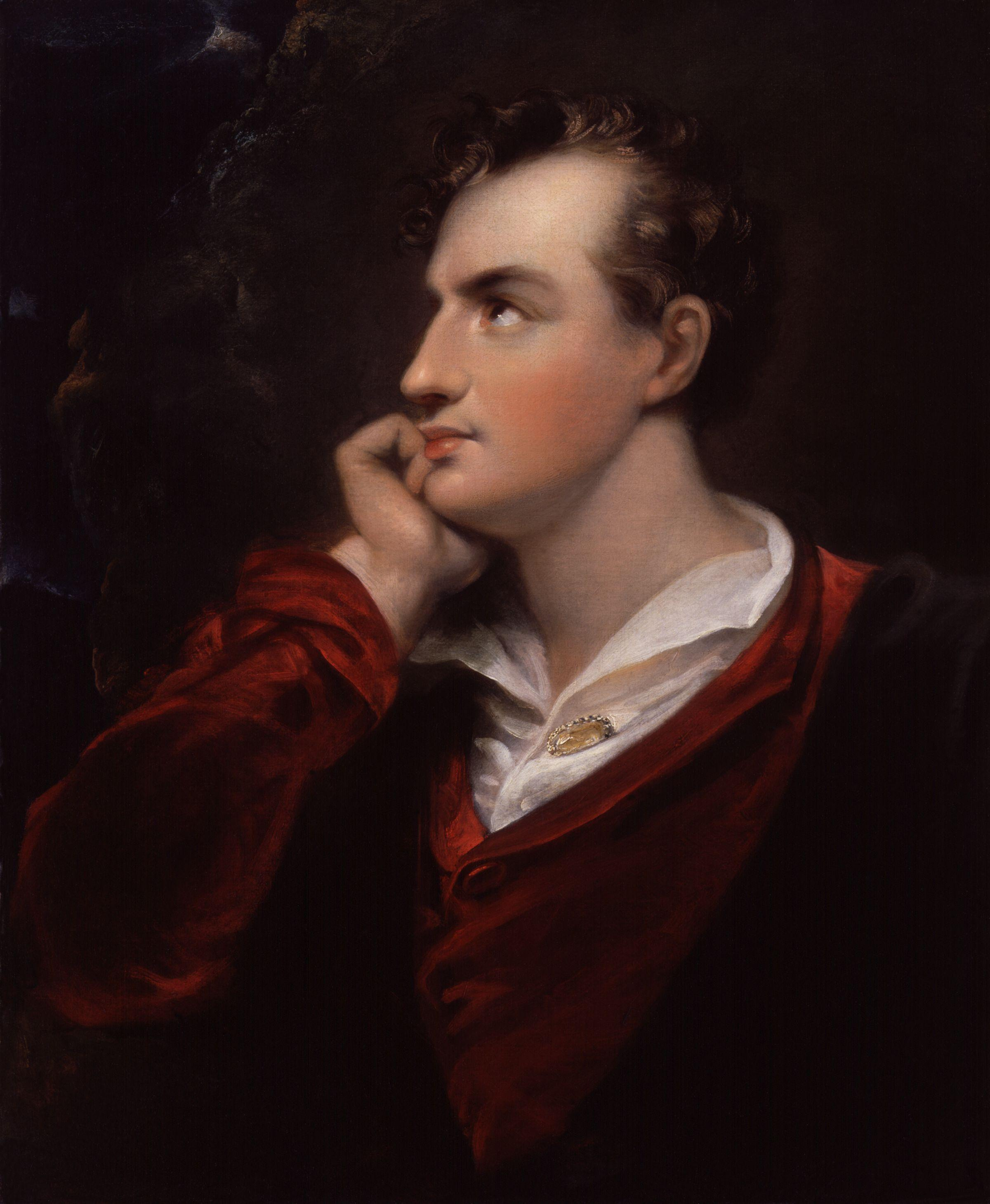
George Gordon Byron citations célèbres
Lettres et Journaux intimes
D'autres auteurs à son sujet
Lettres et Journaux intimes
D'autres auteurs à son sujet
George Gordon Byron Citations
D'autres auteurs à son sujet
Lettres et Journaux intimes
Lettres et Journaux intimes
D'autres auteurs à son sujet
Byron sur ses projets de voyages, cité par le biographe André Maurois
D'autres auteurs à son sujet
D'autres auteurs à son sujet
D'autres auteurs à son sujet
D'autres auteurs à son sujet
D'autres auteurs à son sujet
D'autres auteurs à son sujet
D'autres auteurs à son sujet
D'autres auteurs à son sujet
George Gordon Byron: Citations en anglais
Mazeppa http://readytogoebooks.com/MZP21.htm (1819), stanza 9.
“The "good old times" — all times when old are good —
Are gone.”
St. 1.
The Age of Bronze (1823)
George Gordon Byron livre Cain
Cain (1821), Act I, sc. i.
“Besides, they always smell of bread and butter.”
Stanza 39.
Beppo (1818)
George Gordon Byron Sardanapalus
Act V
Sardanapalus (1821)
Stanzas to Augusta (1816), reported in Bartlett's Familiar Quotations, 10th ed. (1919).
“Oh, God! it is a fearful thing
To see the human soul take wing
In any shape, in any mood.”
George Gordon Byron The Prisoner of Chillon
The Prisoner of Chillon, st. 8.
George Gordon Byron The Prisoner of Chillon
The Prisoner of Chillon, st. 10.
George Gordon Byron The Giaour
Source: The Giaour (1813), Line 123.
“How my soul hates This language,
Which makes life itself a lie,
Flattering dust with eternity.”
George Gordon Byron Sardanapalus
Act I, scene 2.
Sardanapalus (1821)
Stanzas to Augusta http://readytogoebooks.com/LB-Augusta2.html, st. 1 (1816).
“[Armenian] is a rich language, however, and would amply repay any one the trouble of learning it.”
"To Mr. Moore", From the Letters of Lord Byron, 5 December 1816, p. 12.
Lord Byron's Armenian Exercises and Poetry (1870)
From the Letters of Lord Byron (2 January 1817), p. 6.
Lord Byron's Armenian Exercises and Poetry (1870)
“Such hath it been — shall be — beneath the sun
The many still must labour for the one!”
Canto I, stanza 8.
The Corsair (1814)
George Gordon Byron livre Hebrew Melodies
The Destruction of Sennacherib http://englishhistory.net/byron/poems/destruct.html, st. 1. <br class="br">Hebrew Melodies (1815)
Stanzas for Music http://readytogoebooks.com/LB-StanzM-beautysd.htm, st. 1 (1816).
“Hands promiscuously applied,
Round the slight waist, or down the glowing side.”
The Waltz, reported in Bartlett's Familiar Quotations, 10th ed. (1919).
Letter to Thomas Moore, 5 November 1820 http://books.google.com/books?id=K-s_AAAAYAAJ&q=%22When+a+man+hath+no+freedom+to+fight+for+at+home+Let+him+combat+for+that+of+his+neighbours+Let+him+think+of+the+glories+of+Greece+and+of+Rome+And+get+knock'd+on+the+head+for+his+labours+To+do+good+to+mankind+is+the+chivalrous+plan+And+is+always+as+nobly+requited+Then+battle+for+freedom+wherever+you+can+And+if+not+shot+or+hang'd+you+'ll+get+knighted%22&pg=PA377#v=onepage
“Mark! where his carnage and his conquests cease!
He makes a solitude, and calls it — peace!”
George Gordon Byron livre The Bride of Abydos
Canto II, stanza 20. Here Byron is using an adaptation of a quote from Agricola by the Roman historian Tacitus (c. 30). The original words in the text are Auferre, trucidare, rapere, falsis nominibus imperium; atque, ubi solitudinem faciunt, pacem appellant (To robbery, slaighter, plunder, they give the lying name of empire; they make a wilderness, and call it peace). This has also been reported as Solitudinem faciunt, pacem appellant (They make solitude, which they call peace).
The Bride of Abydos (1813)
“Hope withering fled, and Mercy sighed farewell!”
Canto I, stanza 9.
The Corsair (1814)
“By all that's good and glorious.”
George Gordon Byron Sardanapalus
Act I, scene 2.
Sardanapalus (1821)
“There 's not a joy the world can give like that it takes away.”
Stanzas for Music (March 1815), reported in Bartlett's Familiar Quotations, 10th ed. (1919).


